
Main Courses
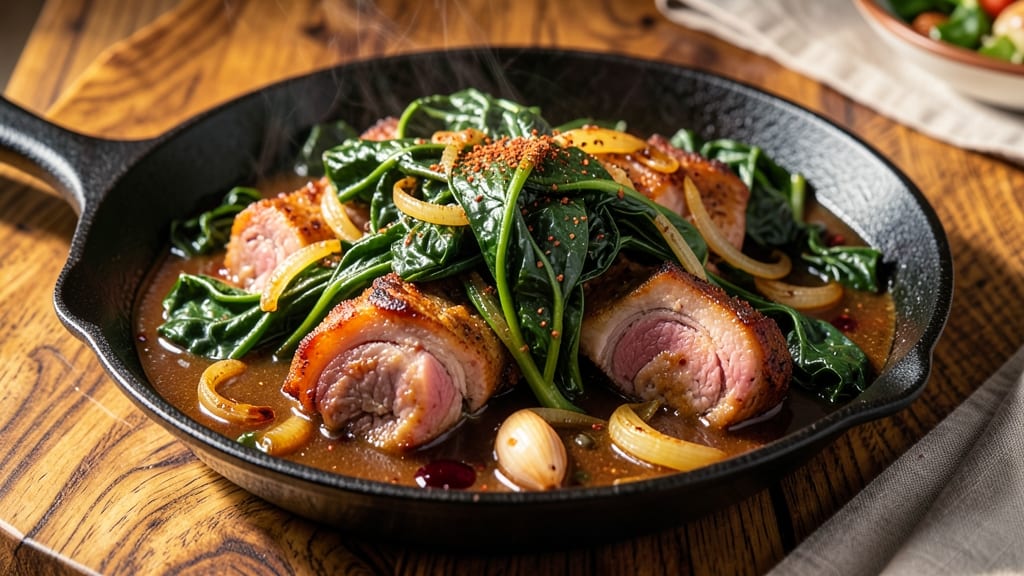
This collard greens with pork hocks recipe transforms tough cuts into melt-in-your-mouth tenderness while turning bitter greens into smoky-sweet perfection. 💛 I first made this after discovering my grandmother's faded recipe card tucked in a cookbook—her notes said "slow love," and that's exactly what this dish delivers.
The secret lies in the pork hocks—simmered low and slow until they fall apart—and the collards, which soften into tender, flavorful bites. Smoked paprika and a splash of vinegar create that signature Southern depth, while onions and garlic build layers of aroma that fill your whole kitchen.
It's the kind of meal that tastes even better the next day.
By the time you're done, you'll have a pot of rich, velvety greens swimming in pork-infused broth, with meat so tender it practically dissolves. The pork hocks become irresistibly flavorful, and the collards develop a perfect balance of sweetness and earthiness.
This is comfort food at its finest—simple ingredients that come together to create something extraordinary.
Serve with warm cornbread to soak up every last bit of that delicious broth, or alongside buttery rice for a complete meal. The leftovers reheat beautifully, making this an ideal recipe for feeding a crowd or prepping for the week ahead. Let's get cooking!
Ingredients for collard greens recipe pork hocks
Six ingredients transform tough pork and bitter greens into a rich, smoky masterpiece.
| Ingredient | Amount | Notes |
|---|---|---|
| Pork Hocks 🍖 | 2 lb | Fresh, untrimmed for maximum flavor |
| Collard Greens 🌿 | 1 ½ lb | Fresh, center ribs removed |
| Yellow Onions 🧅 | 1 whole | Medium, diced for even cooking |
| Garlic Cloves 🧄 | 6 cloves | Fresh, peeled and smashed |
| Smoked Paprika 🌶️ | 2 tbsp | For authentic smoky depth |
| Apple Cider Vinegar 🍎 | ¼ cup | For tangy balance |
| Kosher Salt 🧂 | 1 ½ tbsp | Diamond Crystal preferred |
| Black Peppercorns 🌶️ | 1 tsp | Freshly cracked for aroma |
| Bay Leaves 🍃 | 2 whole | Dried for subtle earthiness |
| Chicken or Vegetable Broth 💧 | 4 cups | Low-sodium preferred |
| Extra-Virgin Olive Oil 🫒 | 2 tbsp | For initial searing |
| Brown Sugar 🍚 | 1 tbsp | Lightly packed for sweetness |
| Hot Sauce 🔥 | 1 tbsp | Optional, for heat (like Tabasco) |
The pork hocks are the heart of this dish. Look for fresh, untrimmed hocks at specialty butchers or well-stocked grocery stores—they're often tucked away in the meat case near the pork chops. Butcher shops usually have the best quality, but don't overlook the meat section at Whole Foods or Trader Joe's—they carry them too. The collards should be vibrant green with crisp stems; avoid any with yellowing leaves or wilted spots. For smoked paprika, Penzeys or McCormick are reliable brands—just check the label for 100% smoked paprika, not a blend.
No pork hocks? Smoked ham hocks work in a pinch, though they'll be saltier. Fresh collards can be swapped for frozen (thawed and drained), but fresh gives you that perfect texture. Running low on vinegar? Red wine vinegar or lemon juice both work, though apple cider adds that signature depth. The broth is where flavor builds—homemade chicken broth is ideal, but even bouillon cubes in a pinch will do. For the sugar, honey works too, but brown sugar caramelizes beautifully during cooking. And if you're feeling adventurous, swap the hot sauce for a dash of liquid smoke for extra smokiness.
This dish tastes even better the next day as flavors meld. Store leftovers in the fridge for up to 5 days—the broth thickens beautifully over time. For freezing, portion into airtight containers and keep for up to 3 months. The pork hocks will fall apart completely when reheated, so plan to serve them with sturdy sides like cornbread or crusty bread to soak up the rich sauce. I always make double batches—one for dinner and one for lunches the next week.
Why You'll Love This Recipe
- One-Pot Wonder: I swear by this recipe because it’s literally one pot—no chopping boards, no extra pans. Toss in the pork hocks, onions, and garlic, then let the collards wilt right in the same liquid. Honestly, I’ve made it after work when I’m too tired to wash dishes, and it still tastes like I slaved over it.
- Smoky, Deep Umami Bomb: The pork hocks melt into that rich, gelatinous goodness that clings to every leaf of collard green, while the smoked paprika adds this perfect earthy kick. Between us, that first bite—where the crispy pork meets the tender greens—is the kind of flavor that makes you pause mid-chew.
- Leftovers That Beg for More: This dish only gets better the next day. The flavors meld into something almost soulful, and reheating it? Just a splash of water, a quick simmer. I’ll be real: I’ve taken it to potlucks, packed it for lunch, and even served it cold in sandwiches (yes, really). It’s that adaptable.
- Budget Booster for Crowds: Pork hocks stretch farther than chicken thighs, and collards are cheaper than kale. For under $10, I feed four people a meal that feels fancy but costs next to nothing. My college roommate still talks about the time I fed six of us with one batch—no one left hungry.
Step-by-step instructions for collard greens with pork hocks
This Southern classic delivers melt-in-your-mouth tenderness with rich, smoky depth.
🔥 Step 1: Sear the Pork Hocks for Maximum Flavor
Heat a large Dutch oven over medium-high heat and add the 2 tablespoons extra-virgin olive oil. Place the 2 lb pork hocks fat-side down and let them sear undisturbed for 8-10 minutes until the fat renders and the skin turns a deep golden brown. This creates a flavorful crust that infuses the broth.
Flip the pork hocks and continue searing for another 6-8 minutes until all sides are evenly browned. Here's the thing—don't rush this step. The longer you sear, the deeper the flavor. Once golden, transfer the pork hocks to a plate and set aside, leaving all that rendered fat in the pot.
👨🍳 Step 2: Build the Flavor-Packed Base
In the same Dutch oven, add the diced yellow onions and cook for 5 minutes until softened and translucent. Stir in the 6 smashed garlic cloves and cook for another 30 seconds until fragrant—this prevents the garlic from burning while extracting its full flavor.
Sprinkle in the 2 tablespoons smoked paprika and stir constantly for 30 seconds to toast the spices and release their aromatic oils. Add the 1 tablespoon brown sugar and 1 tablespoon hot sauce (if using), stirring to combine. This sweet-spicy-savory blend forms the foundation of our smoky-sweet braise.
🥘 Step 3: Deglaze and Simmer the Collards
Pour in the ¼ cup apple cider vinegar and scrape up all those delicious browned bits from the bottom of the pot with a wooden spoon. This deglazing step captures all the flavor we've built so far. Let the vinegar simmer for 2 minutes until it reduces by half.
Add the 4 cups chicken or vegetable broth, 1.5 tablespoons kosher salt, 1 teaspoon cracked black peppercorns, and 2 whole bay leaves. Bring to a gentle boil, then reduce heat to low and return the pork hocks to the pot. Add the 1.5 lb collard greens, spreading them evenly over the pork hocks.
⏰ Step 4: Braise Until Fork-Tender
Cover the Dutch oven and let the collards simmer gently for 1 hour and 30 minutes. The pork hocks should be falling off the bone tender, and the collards should be completely wilted with a rich, velvety texture. Real talk: your kitchen will smell incredible during this time—resist the urge to peek under the lid.
About 30 minutes before the cooking time is up, check the seasoning. The collards should be seasoned perfectly with the pork hocks' natural juices, but if they need more salt, add it gradually. The sauce should coat the back of a spoon with a glossy sheen—this indicates proper braising liquid.
🍽️ Step 5: Rest and Serve with Perfect Texture
Remove the pork hocks from the pot and let them rest on a cutting board for 10 minutes. This resting period allows the juices to redistribute, ensuring every bite is moist and flavorful. Meanwhile, carefully transfer the collards to a serving bowl, leaving behind any large stems.
Discard the bay leaves and adjust the seasoning if needed. Serve the collards hot, ladled over fluffy rice or cornbread, with the pork hocks sliced and arranged on top. Each bite should deliver that perfect balance of smoky, sweet, and tangy flavors with melt-in-your-mouth texture. Don't forget to save some of that flavorful braising liquid for another meal!
Pro Tips For Making Collard Greens Recipe Pork Hocks
- BLANCH PORK HOCKS FIRST: I learned this the hard way—skipping the blanch means the hocks release grease in a rush later, turning your pot into a slippery mess. Drop them in simmering water for 10 minutes before braising; it renders fat gradually and keeps your collards from floating in oil.
- CHOP COLLARDS SMALLER THAN YOU THINK: I used to leave them in big chunks because "that’s how they look in photos," but smaller pieces (about 2-inch lengths) cook faster and soak up the porky flavor better. No, they won’t look "restaurant-perfect," but they’ll taste like your grandma’s—just more tender.
- DON’T SKIP THE SKIN CRACK: When the hocks hit the pot, crank the heat until the skin crackles and turns deep brown. This isn’t just for looks—it locks in flavor and prevents the meat from drying out later. (Yes, even if you’re impatient like me, wait the 3-4 minutes it takes.)
- SAVE TIME WITH FROZEN COLLARDS: Fresh collards are great, but frozen chopped collards (thawed and drained) cut prep time by half and work just as well. Just squeeze out all the water first—wet greens turn your braise into soup, and nobody wants that.
Storing and reheating this collard greens recipe pork hocks
Fridge Storage
Let your collard greens with pork hocks cool completely before storing in an airtight container—I love using glass Pyrex with snap-on lids. Store in the fridge at 40°F or below for up to 5 days.
The flavors actually deepen overnight as the pork hocks continue to tenderize and the collards absorb more of that smoky broth. 💛
When reheating from the fridge, I always add ¼ cup broth or water to prevent drying out. Cover and warm on medium-low heat for 10-15 minutes, stirring occasionally, until everything is steaming hot. The pork hocks will fall apart beautifully, and the collards will regain their velvety texture.
Freezer Prep
For longer storage, portion into quart-sized freezer bags or glass containers, leaving 1-inch headspace for expansion. The collards and pork hocks freeze exceptionally well for up to 3 months. When ready to eat, thaw overnight in the fridge, then reheat using the stovetop method above.
This is my go-to for meal prep—I make double batches so I always have a comforting meal ready.
Pro tip: Freeze the pork hocks separately if you plan to use them in other dishes later. The collards and broth can be frozen together, then reheated with fresh pork hocks added at the end for maximum tenderness. ❄️
Reheating Leftovers
I find the microwave works best for quick lunches. Cover the dish with a damp paper towel and heat on 50% power for 3-4 minutes, stirring halfway through.
The moisture keeps the collards from drying out, and the pork hocks stay juicy. For extra flavor, add a splash of apple cider vinegar or hot sauce before reheating.
If you're serving this dish to guests, I recommend reheating on the stovetop for the best texture. The gentle heat ensures the pork hocks stay moist and the collards maintain their rich, saucy consistency.
Serve with warm cornbread or crusty bread to soak up every last bit of that delicious broth.
Nutrition facts
Frequently asked questions
Why do pork hocks need to be seared so long?
The long sear creates a flavorful crust called the Maillard reaction, which develops deep, meaty flavors that infuse into the broth. Skipping this step means your dish will taste more like boiled pork than rich, smoky collards. Aim for 15-16 minutes total of searing time for maximum flavor.
Can I substitute ham hocks for pork hocks?
Yes, but you'll need to adjust the salt. Ham hocks are much saltier, so reduce added salt to 1 teaspoon and rinse them briefly before cooking. The texture will be slightly different, but the flavor will still be delicious. For best results, use smoked ham hocks to keep that authentic smoky taste.
How do I know when the collards are done?
Your collards are perfect when they're completely wilted and tender enough to cut with a fork. After 1 hour and 30 minutes, test a leaf—it should be soft with no crispness. If they're still tough, add ¼ cup water and simmer another 15-20 minutes covered.
What's the best way to use the leftover broth?
Strain the broth and use it as a base for soups, stews, or even gravy! The rich pork-infused flavor works perfectly with rice dishes, mashed potatoes, or as a dipping sauce. Store it in the fridge for up to 5 days or freeze it for longer storage.
Can I make this in a slow cooker?
Brown the pork hocks first, then transfer everything to a 6-quart slow cooker. Cook on low for 8 hours or high for 4 hours. The slow cooker method is even more forgiving—just check occasionally to ensure the collards don't overcook.