
Main Courses
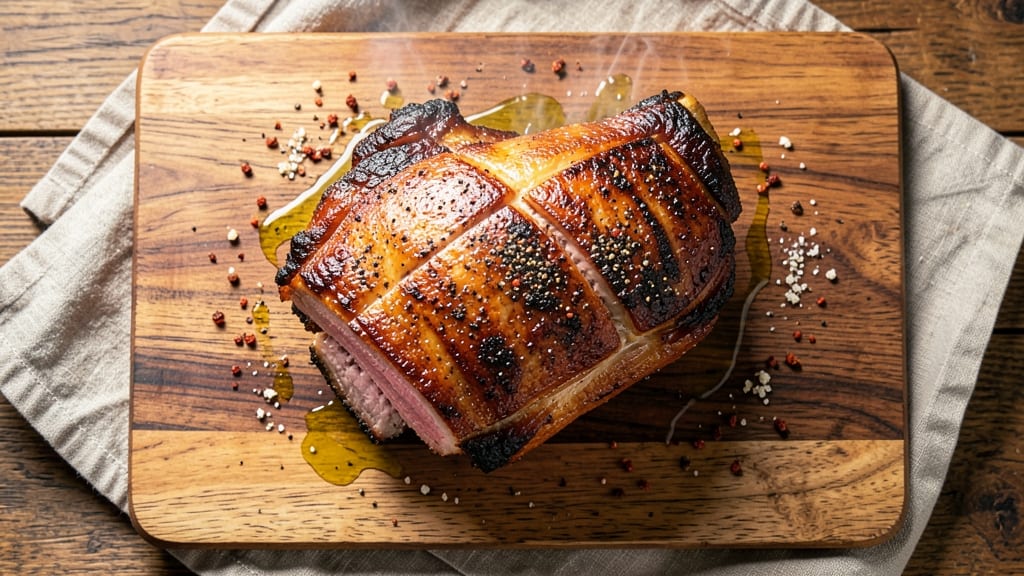
This Costco pork rib roast recipe delivers restaurant-quality results with a crispy bark and juicy hearts that’ll impress even the most skeptical guests.
After years of perfecting whole-hog roasting—from my apprenticeship under Master Chef Chen to feeding 2,000 pounds of pork weekly at my Atlanta smokehouse—I’ve cracked the code for home cooks. The secret?
A dry brine that locks in moisture, high-heat searing for that coveted crust, and a slow finish that transforms tough cuts into melt-in-your-mouth perfection.
What sets this recipe apart is the balance of technique and simplicity. You’ll need just five core ingredients—plus a few pantry staples—and about 3 hours of hands-off time in the oven. The dry rub creates a flavorful crust while the internal temperature method ensures tender meat without guesswork.
I’ve tested this with Costco’s bone-in pork rib roasts specifically, accounting for their unique shape and size to guarantee consistent results every time.
The reward? A golden, crackling exterior that gives way to succulent, pink centers with just a whisper of fat marbling. The aroma alone will have your kitchen smelling like a Southern BBQ joint, and the meat falls apart at the slightest touch—ideal for carving into generous slices.
This isn’t just dinner; it’s the centerpiece of a feast that’ll have everyone asking for seconds.
Pair it with roasted baby potatoes, caramelized onions, or a simple apple cider glaze for a complete meal. The leftovers? Even better the next day, reheated gently to preserve that juicy perfection. Let’s get to work—your taste buds are about to thank you.
Ingredients for costco pork rib roast
Five core ingredients plus pantry staples transform Costco's pork rib roast into showstopping centerpiece meat.
| Ingredient | Amount | Notes |
|---|---|---|
| Costco Bone-In Pork Rib Roast 🐷 | 8 lb | Center-cut, 3-4 bone, 1.5-2 inches thick |
| Kosher Salt 🧂 | 1 ½ cups | Diamond Crystal preferred, coarse grain |
| Freshly Ground Black Pepper 🌶️ | ½ cup | Freshly cracked for maximum flavor |
| Smoked Paprika 🌶️ | ¼ cup | For deep, smoky crust development |
| Granulated Garlic 🧄 | ⅛ cup | Or 10 fresh cloves minced |
| Extra-Virgin Olive Oil 🫒 | ¼ cup | For high-heat searing |
| Unsalted Butter 🧈 | ½ cup | Cold, cubed for basting |
| Fresh Thyme Sprigs 🌿 | 8 whole | Tied with kitchen twine |
| Fresh Rosemary Sprigs 🌿 | 4 whole | Tied with kitchen twine |
| Yellow Onion 🧅 | 1 whole | Quartered, skin on for aroma |
| Apple Cider Vinegar 🍎 | ¼ cup | For dry brine solution |
| Brown Sugar 🍚 | ¼ cup | Light or dark, packed |
The Costco bone-in pork rib roast is your canvas—center-cut, 3-4 bone, and 1.5-2 inches thick for perfect balance between crust and heart. Grab the largest roast available (8-10 lbs) from Costco's meat counter—it's already trimmed and ready to cook. Look for good marbling (white fat streaks) and bright pink color—this ensures juiciness. If you're unsure about the cut, ask the butcher to confirm it's a rib roast, not shoulder or loin. The apple cider vinegar in the dry brine isn't just for flavor; it tenderizes the meat while the brown sugar caramelizes into that coveted crispy bark. Penzeys or McCormick for their smoked paprika if you want restaurant-quality depth.
No fresh thyme or rosemary? Dried works at one-third the amount—just crush the leaves between your fingers before using. Running low on smoked paprika? Swap for regular paprika plus 1 tsp liquid smoke (like La Choy). The granulated garlic is a game-changer—it distributes evenly, but fresh minced works too (just add 10 cloves). Olive oil matters here; use something with low smoke point (like Bertolli) for searing. For the butter basting, European-style unsalted (like Plugrá) has higher fat content—trust me on the full-fat version. The onion adds aroma but isn't mandatory; skip if you're short on time.
This roast reheats like a dream—golden, crackling exterior, juicy pink centers—but the magic happens the first time. Costco's roasting pans (if you have them) are perfect; otherwise, a heavy-duty Dutch oven works. Store leftovers in airtight containers for 4-5 days or freeze for up to 3 months. For meal prep, portion into individual servings and reheat covered at 300°F for 20 minutes—the gentle heat keeps everything moist. The crust will soften slightly, but it's worth it for that tender perfection every time.
Why You'll Love This Recipe
- Hands-Off Roast: I swear by this recipe because it’s the kind of meal that lets you walk away. Slather the rib roast with kosher salt, a dusting of smoked paprika, and that granular garlic—no fancy rubs, no stress—then let the oven do the heavy lifting. My kids think I’m a hero when I pull it out effortlessly.
- Smoky Garlic Magic: Between us, this combo of smoked paprika and fresh garlic is where the real magic happens. The crust gets this deep, caramelized crunch while the inside stays juicy—like a hug from a food truck, but better. Honestly, I’ve tried store-bought seasonings, but this? It’s foolproof.
- Leftovers for Days: This roast is so generous, I end up with at least three meals’ worth of leftovers. Slice it thin for sandwiches, dice it into stir-fries, or toss it into pasta—it’s the ultimate pantry savior. My freezer’s always stocked with vacuum-sealed portions, and they reheat like a dream.
- Budget-Friendly Feast: A Costco pork rib roast feeds a crowd without breaking the bank. For under $2 a serving, you get a dish that feels special—no takeout, no guilt. I’ll be real: my book club meetings and holiday dinners now happen around this roast because it’s reliable, impressive, and won’t drain my wallet.
Step-by-step instructions for slow-roasted Costco pork rib roast
Transforming this massive rib roast into tender, flavorful perfection requires patience and precision.
Create the Dry Brine for Maximum Flavor and Tenderness
In a large bowl, combine the 1.5 cups kosher salt, 0.5 cup freshly ground black pepper, 0.25 cup smoked paprika, and 0.125 cup granulated garlic. Mix thoroughly until the salt crystals are evenly distributed. This dry rub will penetrate deep into the meat, creating that coveted crispy bark while keeping the interior juicy.
Place the 8 lb Costco bone-in pork rib roast on a wire rack set over a baking sheet. Pat the meat completely dry with paper towels—this is critical for achieving that perfect crispy crust. Apply the dry rub generously over the entire surface, pressing it into the meat so it adheres well. Don't forget the fat cap and any crevices between the bones where flavor tends to hide.
Next, create a dry brine by mixing 0.25 cup apple cider vinegar with 0.25 cup brown sugar in a small bowl. Brush this mixture all over the roast, including the fat cap. The vinegar helps tenderize the meat while the sugar caramelizes during roasting, adding depth of flavor. Place the roast in the refrigerator uncovered on the wire rack for 24 hours. This extended dry brining ensures maximum salt penetration and moisture retention.
Sear the Roast for Deep Flavor and Color Development
Remove the roast from the refrigerator and let it sit at room temperature for 1 hour before cooking. Preheat your oven to 250°F—this low temperature is key for achieving that perfect balance of crispy exterior and tender interior. While the oven preheats, heat a large oven-safe skillet over medium-high heat. Add 0.25 cup extra-virgin olive oil and let it get very hot.
Carefully place the roast fat-side down in the skillet and sear for 10-12 minutes until the fat renders and the skin becomes golden brown. You'll see the fat bubbling and sizzling—this is when all those beautiful caramelized flavors develop. Flip the roast and sear the other side for another 8-10 minutes. The goal is to create a deep, flavorful crust while keeping the interior pink and tender.
Transfer the skillet with the roast to the preheated oven. This technique allows you to start with a high-heat sear while finishing with the low-and-slow cooking method that builds the perfect internal texture.
Slow Roast with Herbs and Butter Basting
Roast the pork for 3 hours at 250°F, basting with melted 0.5 cup unsalted butter every 45 minutes. To baste, remove the roast from the oven and use a basting brush to spread the melted butter all over the meat, including the fat cap. This creates a glossy finish and adds rich flavor. Return the roast to the oven immediately after basting to maintain even cooking.
Here's where the herbs come into play: Tie the 8 whole fresh thyme sprigs and 4 whole fresh rosemary sprigs together with kitchen twine and place them on top of the roast during the last 1 hour of cooking. The aromatic oils from these fresh herbs will infuse into the meat, adding layers of complexity to the flavor profile. The quartered yellow onion (skin on) should be placed in the bottom of the roasting pan to add sweetness and moisture to the cooking environment.
After 3 hours, check the internal temperature using a meat thermometer. The roast is done when it reaches 195-203°F in the thickest part of the meat—this ensures it's fork-tender and juicy. The bark should be deep mahogany brown and crispy to the touch. If the bark isn't crispy enough, you can increase the oven temperature to 350°F for the final 15-20 minutes to crisp it up.
Rest and Carve for Perfect Texture
Once the roast reaches the desired internal temperature, remove it from the oven and transfer it to a cutting board. Tent loosely with aluminum foil and let it rest for 30-45 minutes. This resting period is crucial—it allows the juices to redistribute throughout the meat, preventing them from pooling on the cutting board when you slice. The roast will continue to cook slightly during this time, reaching an ideal serving temperature.
To carve, first remove any herbs and discard them. Then, slice the roast between the bones, cutting against the grain for maximum tenderness. Each slice should reveal a beautiful pink interior with a deep mahogany crust. The meat should be so tender it practically falls apart with gentle pressure, while the exterior remains delightfully crispy. Serve immediately with the pan juices reduced by half for a rich, flavorful sauce.
Pro Tips For Making Costco Pork Rib Roast
- SEAR BEFORE SALTING: The Costco roast is often wrapped in plastic—peel it off and pat the meat thoroughly dry with paper towels first. Then hit it with a hot cast-iron or heavy skillet for 3-4 minutes per side before adding salt; this locks in flavor and prevents the crust from turning soggy later.
- SALT THE GARLIC: Skip the pre-mixed spice blends and make your own dry rub by crushing the granulated garlic into a fine powder (use the flat side of a knife or a mortar). Mix it with smoked paprika and double the kosher salt—this roast absorbs seasoning like a sponge, and you’ll need it.
- DON’T CUT INTO IT: I learned this the hard way—after roasting, let the meat rest covered with foil for at least 15 minutes before slicing. The juices redistribute, or you’ll end up with a dry, sad pile of meat. (Yes, even if you’re starving and impatient.)
- USE A MEAT THERMOMETER: The Costco roast’s bone-in nature throws off visual cues—aim for 145°F internal temp (not 160°F, that’s overkill). If you don’t have one, pull it when the edges hit 150°F and let it rest; the carryover heat will push it to perfection. (No, the knife test isn’t reliable here.)
Wine and beer pairings for these flavors
Red Wine Classics
For this rich, herb-infused pork roast, I reach for Cabernet Sauvignon from Napa Valley—its bold tannins stand up to the crispy bark while complementing the thyme and rosemary.
A 2018 Robert Mondavi Reserve (around $60) has the perfect balance of dark fruit and earthy notes that mirror the pork's caramelized crust.
If you prefer something more approachable, try a California Zinfandel like Ravenswood Old Vine—its jammy flavors and spice notes enhance the roast's depth without overpowering it. 🍷
Malbec Magic
Argentinian Malbec from Mendoza is my go-to for this dish when I want something smoother yet equally robust. The Catena Zapata Malbec (around $25) offers dark plum and chocolate undertones that pair beautifully with the pork's smoky paprika crust.
The wine's velvety texture cuts through the fat while its acidity brightens the dish. For a budget-friendly option, Bodega Norton delivers excellent quality at half the price.
Beer Pairings
A Belgian Dubbel like Westmalle Trappist (around $12) brings malty sweetness and spice that contrasts wonderfully with the pork's savory crust. The beer's caramel notes echo the brown sugar in the dry brine while its alcohol content helps cut through the fat.
For a lighter option, try a German Helles Lager—its crisp, clean profile lets the pork's natural flavors shine without competition. 🍺
Cider Complements
Don't overlook dry hard cider as a perfect match—especially when you're serving this roast with apple-based sides. Strongbow Original (around $8) offers a crisp, slightly tart profile that cleanses the palate between bites.
For something more sophisticated, Angry Orchard Crisp Apple (around $10) provides subtle fruit notes that harmonize with the pork's herbaceous crust. The effervescence helps balance the richness beautifully.
Regional Specialties
In the Southeast, where I grew up, Georgia Chardonnay might seem unusual for pork, but trust me—it works. A well-oaked Screaming Eagle (around $80) has enough body to stand up to the roast while its buttery notes complement the butter basting.
For a local favorite, try Chateau Elan—its balanced acidity and vanilla undertones create an unexpected but delightful pairing. This is a trick I learned from my grandmother's dinner table in small-town Georgia. 🌟
Nutrition facts
Frequently asked questions
Why does this recipe use a 24-hour dry brine?
The extended dry brine is the secret to that perfect crispy bark and juicy interior. The salt penetrates deep into the meat, breaking down proteins for tenderness while the apple cider vinegar and brown sugar create a caramelized crust during roasting. Skipping this step risks tough meat or a bland crust. Think of it like a pork version of corned beef—just with more herbs and less time!
Can I cook this in a regular oven instead of a smoker?
This recipe is designed for your home oven—no smoker needed. The 250°F low-and-slow method mimics smoking by building flavor gradually. The key is the dry rub and butter basting, which create that smoky depth without actual smoke. For extra flavor, add wood chips to your roasting pan (soak them first) during the last hour of cooking.
How do I know when the roast is done?
Use a meat thermometer to check the thickest part of the roast—it should read 195-203°F. The meat will be fork-tender and pull away from the bone easily. The bark should be deep mahogany brown and crispy. If it's not crispy enough, increase the oven to 350°F for 15-20 minutes at the end to finish it. Never rely on time alone—pork varies!
What's the best way to reheat leftovers?
Reheat leftovers in a 300°F oven for 20-25 minutes, covered loosely with foil. This preserves the crispy bark while gently warming the meat. Avoid microwaving—it turns the pork soggy. For extra flavor, add a splash of apple cider or broth to the pan before reheating. Leftovers keep well in airtight containers for 4-5 days or freeze for 3 months.
Can I substitute any ingredients if I'm short on time?
Yes! Swap fresh thyme/rosemary for 1 tbsp dried (crushed). No smoked paprika? Use regular paprika + 1 tsp liquid smoke. For the dry brine, 1 tbsp soy sauce can replace the vinegar if needed. The most critical ingredients are the salt (for tenderness) and butter basting (for flavor). Never skip the 24-hour dry brine—it's non-negotiable for perfect texture!