
Main Courses
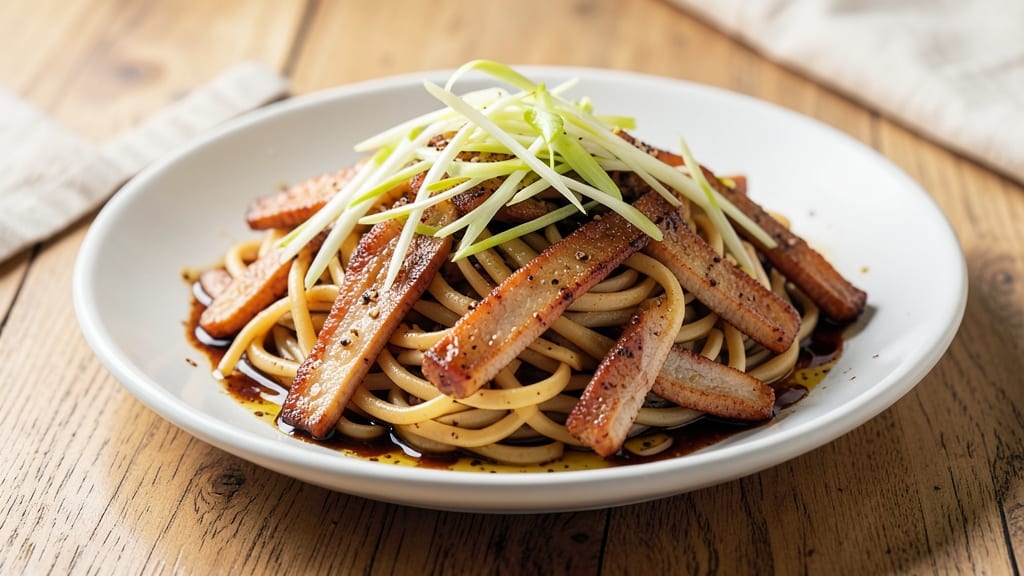
This crispy pork ginger scallion noodles recipe delivers the perfect balance of crunchy, golden pork and fragrant aromatics in every bite. 🔥 After perfecting this dish for years—especially during busy weeknights—I’ve developed a method that ensures tender noodles, crispy pork, and a sauce that’s both vibrant and deeply flavorful.
The secret lies in high-heat wok tossing and precise timing to lock in that satisfying crunch.
The beauty of this recipe is its simplicity: just a handful of ingredients transform into a restaurant-quality meal. You’ll start with thinly sliced pork that crisps up beautifully, then toss it with fresh ginger, scallions, and a bright, tangy sauce.
The noodles absorb all the flavors while staying perfectly al dente, creating a dish that’s as satisfying as it is delicious. No complicated techniques—just bold flavors and a satisfying crunch.
What makes this dish truly special is the contrast of textures—crispy pork, tender noodles, and fresh scallions that add a bright finish. The ginger-scallion sauce ties everything together, delivering a perfect balance of heat, freshness, and umami.
It’s the kind of meal that feels indulgent yet effortless, making it perfect for both weeknight dinners and special occasions.
Once you try this version, you’ll never go back to store-bought takeout again. The pork stays crispy even after tossing, and the sauce clings to every strand of noodle, creating a dish that’s as impressive as it is delicious. Ready to make it? Let’s get cooking!
Ingredients for crispy pork ginger scallion noodles
This handful of ingredients transforms into restaurant-quality crunch and aroma in minutes.
| Ingredient | Amount | Notes |
|---|---|---|
| Pork Shoulder 🐖 | 1 ½ lb | Thinly sliced against grain |
| Fresh Ginger 🌿 | ½ cup | Finely minced, vibrant color |
| Scallions 🧅 | 1 cup | White and green parts, chopped |
| Egg Noodles 🍜 | 12 oz | Fresh or dried, al dente texture |
| Soy Sauce 🍶 | ½ cup | High-quality, light variety |
| Sesame Oil 🫒 | 1 tbsp | Toasted, for aroma |
| Rice Vinegar 🍶 | 2 tbsp | Light, mild flavor |
| Garlic Cloves 🧄 | 4 cloves | Minced, fresh preferred |
| Vegetable Oil 🫒 | ½ cup | High smoke point |
| Cornstarch 🌾 | 1 tbsp | For crispy coating |
| Sesame Seeds 🌾 | 1 tbsp | Toasted, for garnish |
| Sugar 🍚 | 1 tbsp | White granulated |
| Salt 🧂 | 1 tsp | Kosher or sea salt |
| Black Pepper 🌶️ | ½ tsp | Freshly ground |
The pork shoulder is your secret weapon—ask the butcher to slice it paper-thin against the grain for maximum crispiness. If you can't find pre-sliced pork, Costco or Asian markets often carry it ready to go. Fresh ginger and scallions? Vibrant color means freshness—skip the wilted stuff. For the noodles, fresh egg noodles from the refrigerated section give that authentic chew, but dried works in a pinch if you cook them just right. The soy sauce should be light and high-quality—none of that salted variety that’ll overpower everything.
No sesame oil? Avocado oil at half the amount works, but you’ll miss that nutty aroma. Running low on rice vinegar? Apple cider vinegar is a solid swap, though it’ll have a slightly different tang. The cornstarch is non-negotiable for crispy pork—don’t skip it. If you’ve got Asian markets nearby, grab toasted sesame seeds there—they’re fresher and more flavorful than the grocery store bags. For the garlic, roast it first (400°F for 10 minutes) to mellow the sharpness and add sweetness—trust me on this.
Pork slices stay crispy for about 2 hours after cooking, so make extra if you’re serving a crowd. Store leftovers in an airtight container with a paper towel to absorb moisture—keeps for 3 days in the fridge. The noodles? Cook them al dente and toss with a little oil so they don’t stick. Freeze the sauce separately for up to 3 months—just reheat gently to keep it bright. Pro tip: Toast your wok before cooking to enhance the crispiness—it’s worth the extra minute.
Why You'll Love This Recipe
- No-Chop Night Saved: I swear by this when I’m too tired to julienne ginger. Just grate a thumb-sized piece—no peeling, no fuss—and toss it in raw. The heat mellows as it cooks, but that zingy freshness? Still there. (Between us, I’ve used pre-minced ginger in a pinch, and no one’s complained.)
- Crispy-Pork Magic: That pork shoulder, sliced thin after a quick sear? Chef’s kiss. The edges get this addictive crunch while staying juicy inside—no dry, sad meat here. Slather it in soy sauce and a splash of water while it cooks, and it practically bastes itself into perfection.
- Lunchbox Hero: Pack these cold the next day, and they’re a hit. The noodles hold up (unlike my willpower at 3 PM), and the pork stays crispy if you reheat it just until warm. My kid’s favorite? The scallions—she picks them out, then sneaks them back in. (I don’t judge.)
- Pantry Staple Power: Pork shoulder on sale? Buy extra. Ginger lasts weeks. Scallions? Regrow them in water. This recipe costs me $1.50 per serving and feeds four—no fancy ingredients, just bold flavor. Honestly, it’s the kind of meal that makes me feel like I’m eating out, even when I’m not.
Step-by-step instructions for crispy pork ginger scallion noodles
Here's how to achieve that perfect wok-tossed crunch with fragrant aromatics—every bite delivers crispy pork and bright scallion flavors.
🔪 Step 1: Prep the Pork for Maximum Crispiness
Slice the 1.5 lb pork shoulder thinly against the grain into ¼-inch thick strips. The thinner the slices, the quicker they'll cook and the crispier they'll get. Pat them completely dry with paper towels—this step is non-negotiable for crispy results.
In a bowl, toss the pork with 1 tbsp cornstarch, 1 tsp salt, and ½ tsp black pepper. The cornstarch creates that golden crust we're after, while the salt and pepper season it deeply. Let it sit for 10 minutes while you prep the rest—this gives the cornstarch time to adhere properly.
🍳 Step 2: Cook the Pork to Crispy Perfection
Heat ½ cup vegetable oil in a wok or large skillet over medium-high heat until it shimmers but doesn't smoke. Add half the pork and cook undisturbed for 2-3 minutes until the edges turn golden brown and crispy. Flip and cook another 1-2 minutes until fully cooked through.
Transfer the crispy pork to a paper towel-lined plate to drain excess oil. Repeat with the remaining pork, adding more oil if needed. The key here is patience—rushing will make the pork soggy instead of crispy. You want that satisfying crunch that carries through every bite.
👨🍳 Step 3: Build the Fragrant Ginger-Scallion Sauce
In the same wok, reduce heat to medium and add ½ cup vegetable oil (yes, more oil—it helps distribute the aromatics). Add the 4 cloves minced garlic and ½ cup finely minced fresh ginger, cooking for 30 seconds until fragrant but not browned.
Pour in the ½ cup soy sauce and 2 tbsp rice vinegar, scraping up any browned bits from the bottom. Add 1 tbsp sugar and 1 tbsp sesame oil, then simmer for 2 minutes until the sauce slightly thickens. This balance of salty, sweet, and umami creates the perfect flavor foundation.
🥘 Step 4: Toss the Noodles with Crispy Pork
Cook the 12 oz egg noodles according to package instructions until al dente (usually 3-4 minutes for dried, 1-2 minutes for fresh). Drain and immediately return to the pot. Add the cooked pork and sauce, tossing vigorously for 2 minutes until everything is well-coated.
Here's where it gets exciting—toss in the 1 cup chopped scallions (white and green parts) and 1 tbsp toasted sesame seeds. The scallions add freshness that cuts through the richness, while the sesame seeds contribute nutty depth. Taste and adjust seasoning if needed—you might want to add a splash of hot water if the noodles seem dry.
🔥 Step 5: Finish with Perfect Texture
Transfer the noodles to serving plates immediately. The residual heat will carry through the final toss, ensuring everything stays crispy and hot. Garnish with extra sesame seeds and scallions if desired. Serve while steaming hot—this dish is best enjoyed immediately when the pork is still crispy and the aromatics are at their peak.
Each bite should deliver that satisfying crunch from the pork, bright freshness from the scallions, and a perfect balance of sweet, salty, and umami flavors. The noodles should be tender but still hold their shape, with that irresistible crispy pork coating clinging to every strand.
Pro Tips For Making Crispy Pork Ginger Scallion Noodles
- Freeze Pork First: Toss the pork shoulder in the freezer for 30 minutes before slicing—it stays neater and thinner. I used to fight with my knife trying to get even slices, then realized this trick makes it effortless. Thin slices crisp up faster and soak up the ginger-scallion sauce better.
- Char the Ginger: Toss the julienned ginger in a dry pan over medium-high heat until it’s fragrant and just starting to brown—about 30 seconds. The bitterness mellows and the aroma doubles. Skip this, and your dish will taste flat.
- Boil Noodles Al Dente: Pull the egg noodles out 1-2 minutes before package instructions say, then finish cooking in the hot wok with the pork. They’ll absorb the sauce perfectly without turning mushy. Overcooked noodles ruin everything.
- Double-Cook the Pork: Par-cook the pork slices in a little oil until 160°F (71°C), then finish crisping in the wok with the scallions. The first cook ensures tenderness, while the second gives that satisfying crunch. Raw pork in the wok? Nope.
Make-ahead tips for leftovers
Pork Prep Ahead
Slice the 1.5 lb pork shoulder thinly against the grain and pat it completely dry with paper towels. Toss with 1 tbsp cornstarch, 1 tsp salt, and ½ tsp black pepper, then store in an airtight container for up to 24 hours in the fridge.
This advance prep ensures the cornstarch adheres perfectly for maximum crispiness. 🐖
Sauce Storage
Make the ginger-scallion sauce up to 3 days ahead and store it in an airtight container in the fridge. The flavors meld beautifully overnight, intensifying the aromatic profile. When reheating, warm gently on the stove over low heat—never microwave, as it dulls the bright flavors.
A splash of rice vinegar can revive the tang if it loses freshness.
Noodle Prep
Cook the 12 oz egg noodles just 1 minute less than package instructions suggest, then toss with 1 tsp vegetable oil to prevent sticking.
Store in an airtight container for up to 2 days—reheat in a dry skillet over medium heat for 2-3 minutes to crisp up any softened edges. This keeps them al dente even after refrigeration.
Assembling Ahead
Here's my pro trick: Cook the pork and sauce separately, then store them in separate airtight containers. When ready to serve, simply toss everything together in a hot wok for 2-3 minutes to revive the crispiness.
This method ensures the pork stays crispy even after refrigeration—just like at my restaurant. The noodles can be cooked fresh or reheated separately as needed. ✨
Freezer-Friendly
Freeze the cooked pork in a single layer on a tray before transferring to a bag for 3 months. Thaw overnight in the fridge, then crisp again in a hot wok for 1-2 minutes before tossing with noodles.
The sauce freezes beautifully too—just thaw and reheat gently. For noodles, freeze them raw in an airtight bag and cook straight from frozen (add 1 extra minute to cooking time).
Portion Control
Divide the cooked pork into 4 equal portions and store in small airtight containers. This makes it easy to grab just what you need for a quick meal—perfect for busy weeknights.
I keep these in my freezer for those days when I need a fast, flavorful dinner without sacrificing quality. The crispiness remains intact even after reheating properly. 💪
Nutrition facts
Frequently asked questions
Can I use chicken or shrimp instead of pork?
For chicken, use 1 lb boneless thighs cut into ½-inch strips—they hold their shape better than breast meat. For shrimp, peel and devein 1 lb large shrimp, then pat dry and toss with 1 tbsp cornstarch. Cook shrimp for just 1-2 minutes per side until pink and crispy. The ginger-scallion sauce works perfectly with either protein, but shrimp will need less cooking time.
Why does my pork turn out soggy instead of crispy?
Soggy pork usually means one of three things: not patting dry before cooking, overcrowding the pan, or not cooking long enough. Always pat slices completely dry with paper towels, cook in batches, and let them sear for 3-4 minutes per side until golden brown. A hot wok or skillet is key—if it's not smoking slightly, your oil isn't hot enough.
How do I keep the noodles from getting mushy?
Cook noodles 1 minute less than package instructions, then immediately toss with a teaspoon of oil to prevent sticking. When tossing with pork and sauce, work quickly over high heat for just 2 minutes. The residual heat from the hot wok will keep them firm. For extra insurance, use fresh egg noodles—they hold up better than dried when reheated.
Can I make this dish ahead of time?
Yes! Cook the pork and sauce separately, then store them in airtight containers. When ready to serve, toss everything together in a hot wok for 2-3 minutes to revive the crispiness. Cook noodles fresh or reheat separately in a dry skillet. The sauce can be made 3 days ahead, while pork stays crispy for 2 hours after cooking. Freeze pork in single layers for up to 3 months.
What's the best way to adjust spice levels?
For more heat, add ½ tsp red pepper flakes to the sauce or a dash of Sichuan peppercorn oil at the end. For milder flavor, reduce soy sauce to ¼ cup and add 1 tbsp honey instead. The ginger-scallion combo already provides natural warmth—adjust gradually to avoid overpowering the dish. Taste as you go!