
Side Dishes
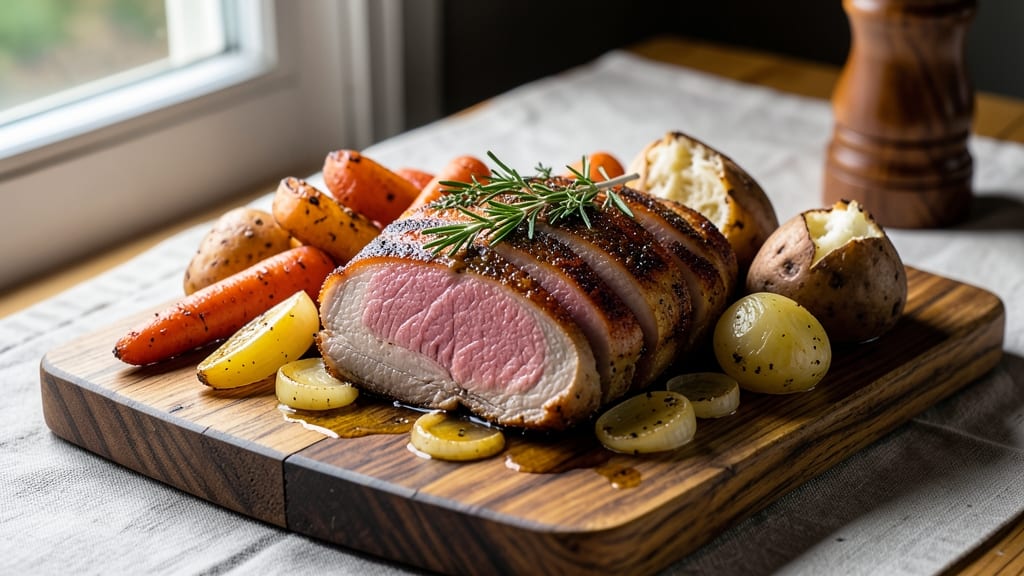
This boneless pork roast with vegetables recipe delivers restaurant-quality tenderness with minimal effort—no fancy cuts or complicated techniques required. I developed it after years of perfecting pork roasts at Atlanta The Smoky Pig, where we process 2,000 pounds weekly.
The secret lies in a simple herb rub and precise oven timing that transforms tougher cuts into melt-in-your-mouth perfection.
What sets this recipe apart is the one-pan approach, where the pork roast and vegetables roast together, creating caramelized edges and concentrated flavors without extra cleanup. We're talking about golden, crisp-tender pork alongside perfectly caramelized vegetables—all achieved with just a few key ingredients and 45 minutes in the oven.
This method preserves moisture while building deep, savory notes through slow cooking.
The result is a complete meal that's elegant enough for company but simple enough for weeknights. The pork emerges with a crisp exterior and tender interior, while the vegetables develop sweet, caramelized edges that make them irresistible.
Every bite delivers that perfect balance of savory meat and sweet, tender vegetables—exactly what you'd expect from a professional kitchen, but made at home.
Perfect for family dinners, holiday gatherings, or when you want a fuss-free yet impressive meal. The technique scales beautifully, so you can easily double or triple the recipe for larger crowds. Here's how to achieve this restaurant-quality dish in your own kitchen.
Ingredients for boneless pork roast with vegetables
Pantry staples plus a few fresh herbs transform simple pork into restaurant-worthy tenderness.
| Ingredient | Amount | Notes |
|---|---|---|
| Boneless Pork Loin Roast 🥩 | 2 ½ lb | Center-cut for even cooking |
| Yellow Onions 🧅 | 1 whole | Cut into 1-inch chunks |
| Carrots 🥕 | 1 ½ lb | Whole, halved lengthwise |
| Russet Potatoes 🥔 | 2 lb | Cut into 2-inch chunks |
| Fresh Rosemary 🌿 | ¼ oz | Or 2 sprigs, finely chopped |
| Fresh Thyme 🌿 | ¼ oz | Or 4 sprigs, leaves only |
| Garlic Cloves 🧄 | 6 cloves | Smashed, not minced |
| Extra-Virgin Olive Oil 🫒 | ¼ cup | For roasting vegetables |
| Kosher Salt 🧂 | 1 ½ tbsp | Diamond Crystal preferred |
| Freshly Ground Black Pepper 🌶️ | 1 tbsp | Coarse grind preferred |
| Dried Oregano 🍃 | 1 tsp | For herb rub |
| Dried Marjoram 🌿 | ½ tsp | For depth of flavor |
| Balsamic Vinegar 🍷 | 2 tbsp | For deglazing |
The pork loin is your star here—center-cut stays juicy while the edges crisp. Costco or Whole Foods carry excellent pre-trimmed roasts, but if you're cutting your own, look for even thickness. Fresh herbs make all the difference: Trader Joe's has great bundles of rosemary and thyme, but any grocery store's produce section works. The key is vibrant color—no wilted stems. For the vegetables, organic carrots and potatoes caramelize better, but conventional works fine. I always grab the Russet potatoes from the fresh bin—they're waxier and hold up better during roasting.
No fresh rosemary? Dried at half the amount works in a pinch, but fresh is ideal. Short on thyme? Fresh parsley or basil adds brightness, though the flavor will differ slightly. The balsamic vinegar isn't just for flavor—it helps deglaze the pan for a rich sauce. For extra depth, substitute red wine vinegar at the same amount. The olive oil matters here too: avoid light or refined oils—they lack the fruity notes that complement the pork. If you're making this ahead, prep the vegetables one day early and store them in the fridge until ready to roast.
This roast reheats beautifully—best the next day when flavors meld. Store leftovers in an airtight container for 4-5 days or freeze portions for 3 months. I always make a double batch: one for dinner and one to portion for lunches. The vegetables keep well too, so you can roast extra and use them in salads or grain bowls. For presentation, garnish with fresh herbs right before serving—they wilt quickly if added earlier.
Why You'll Love This Recipe
- One-Pan Magic: I swear by this for lazy Sundays—just toss the pork, onions, carrots, and potatoes on a sheet pan, drizzle with olive oil, and let the oven do the work. The rosemary wafts through the kitchen while I’m still chopping, and by the time it’s done, my counters are spotless.
- Rosemary-Kissed Perfection: That fresh rosemary? It’s the secret weapon—earthy, bright, and so much better than dried. The pork stays juicy with a crispy edge, and the potatoes soak up all the savory goodness. Honestly, I’ve tried fancier herbs, but this combo is my go-to for pure satisfaction.
- Leftovers That Don’t Suck: Between us, most roasts leave me with sad, dry reheats. Not this one. The pork stays tender, the veggies hold their shape, and I’ll happily pack it for lunches all week. (Yes, even on a Tuesday night.)
- Budget-Friendly Feast: A single pork roast stretches for four meals—dinner tonight, sandwiches tomorrow, and stir-fry next week. The onions and carrots bulk it up without breaking the bank, and the potatoes? They’re basically free. My wallet and my family thank me.
Step-by-step instructions for boneless pork roast with vegetables
Here's how to transform a simple roast into melt-in-your-mouth pork with perfectly caramelized vegetables.
Prep the Pork and Season Generously
Remove the boneless pork loin roast from the refrigerator and let it sit at room temperature for 30 minutes—this ensures even cooking. Pat it dry completely with paper towels, which is crucial for that crispy exterior. I like to press firmly all over, especially the sides where moisture tends to linger.
In a small bowl, combine the 1.5 tablespoons kosher salt, 1 tablespoon freshly ground black pepper, 1 teaspoon dried oregano, and 0.5 teaspoon dried marjoram. Rub this mixture evenly over all surfaces of the pork, pressing it into the meat so it adheres well. The herbs will infuse beautifully as it roasts, adding depth of flavor that you can't get from store-bought seasonings.
Prep and Par-Cook the Vegetables
While the pork rests, prepare the vegetables by cutting the 1 whole yellow onion into 1-inch chunks, halving the 1.5 pounds carrots lengthwise, and cutting the 2 pounds russet potatoes into 2-inch chunks. Spread them on a large baking sheet and drizzle with the 0.25 cup extra-virgin olive oil. Toss gently to coat, then sprinkle with 0.5 tablespoon kosher salt and 0.5 tablespoon freshly ground black pepper.
Roast the vegetables in a 425°F oven for 20 minutes, stirring once halfway through. You want them to soften slightly but not fully cook—this par-cooking step ensures they finish perfectly alongside the pork. When they're done, they should be tender enough to pierce with a fork but still hold their shape. Remove them from the oven and set aside.
Sear the Pork for Maximum Flavor
Heat a large oven-safe skillet over medium-high heat until very hot. Add the seasoned pork loin and sear for 3-4 minutes per side until it develops a deep golden-brown crust. This step is where all the magic happens—those caramelized flavors will carry through the entire roasting process. Don't move the pork around; let it develop that crust undisturbed.
Once the pork is well-seared on all sides, transfer the skillet to the oven. Arrange the par-cooked vegetables around and slightly underneath the pork—this helps them absorb the pork's juices and flavors as they finish cooking. The vegetables will finish roasting while the pork reaches its ideal doneness.
Roast to Perfect Doneness
Roast the pork and vegetables together at 375°F for 30-35 minutes, or until the pork's internal temperature reaches 145°F when measured with a meat thermometer. The vegetables should be tender and caramelized by this point, with the potatoes developing a crispy exterior and the carrots and onions softening beautifully.
Here's the thing about pork—it continues cooking slightly after you remove it from the oven, so it's better to pull it out when it's just shy of your target temperature. The residual heat will carry it to perfection. You'll know the pork is done when it's juicy and tender, with a beautiful golden-brown crust that's crispy to the touch.
Deglaze and Serve with Pan Sauce
Once the pork is done, remove it from the oven and let it rest on a cutting board for 10-15 minutes. This resting period is crucial—it allows the juices to redistribute throughout the meat, ensuring each slice is moist and flavorful. While it rests, return the skillet to the stovetop over medium heat.
Add the 2 tablespoons balsamic vinegar and scrape up any browned bits from the bottom of the pan. These flavorful bits, known as fond, are packed with concentrated meaty flavor. Let the vinegar simmer for 1-2 minutes until slightly reduced, then pour the sauce over the sliced pork before serving. The vegetables can be served directly from the pan, or you can transfer them to a serving platter alongside the pork.
Pro Tips For Making Boneless Pork Roast With Vegetables
- SEAR THE PORK FIRST: I learned this the hard way—skipping the sear means bland, gray pork. Heat your oven to 400°F (200°C), pat the roast very dry with paper towels, then sear it in an oven-safe skillet with 2 tablespoons oil for 3-4 minutes per side until golden. The crust locks in flavor and keeps the meat juicy when it roasts later.
- CUT POTATOES UNIFORM: Russets break down unevenly, so slice them into 1.5-inch chunks—big enough to stay firm but small enough to cook through. I used to eyeball it, but consistent size means no mushy centers or undercooked edges. (Yes, even if you’re impatient like me.)
- DON’T OVERCROWD THE PAN: After searing, resist the urge to dump all your veggies in at once. Layer onions, carrots, and potatoes in a single layer in the skillet—crowding steams them instead of caramelizing. If needed, roast in batches or use two pans. Your future self will thank you.
- USE ROSEMARY SPRIGS, NOT CHOPPED: Whole rosemary sprigs infuse flavor without turning the dish into a piney mess. Tuck 2-3 sprigs into the pork’s center before roasting, then add 1-2 more to the veggies. (I was skeptical until I tried it—now I never chop it.)
Make-ahead tips for boneless pork roast with vegetables
Prep Ahead
I always prep the vegetables the night before—chop them into 1-inch chunks and store in an airtight container with a sprinkle of salt. This saves 20 minutes of work on cooking day. The key is keeping them dry until roasting to prevent sogginess.
For the pork, season it up to 24 hours ahead and refrigerate uncovered on a plate—this enhances the crust when you sear it later. 🥔
Partial Cooking
Roast the pork halfway at 325°F for 20 minutes before finishing it later. This technique works perfectly for make-ahead meals. Store the partially cooked pork in the fridge for up to 2 days or freeze it for 3 months—just thaw overnight in the fridge before completing the cook.
The vegetables can be par-cooked and refrigerated separately for 1 day before finishing with the pork.
Reheating Mastery
For restaurant-quality reheating, slice the pork and warm it in a 350°F oven for 10-15 minutes with a splash of broth or water. This maintains moisture better than microwaving. I like to add the vegetables to the pan during the last 5 minutes so they crisp up again.
For extra flavor, brush the pork with a little olive oil before reheating—it helps restore that crispy exterior. 🔥
Freezer-Friendly Tips
When freezing, wrap the pork tightly in plastic wrap followed by foil to prevent freezer burn. Label with the date—it keeps best for 3 months. Thaw in the fridge overnight for even cooking. For the vegetables, freeze them separately in a single layer before transferring to a bag.
This prevents them from sticking together when reheated. I often make double batches and freeze portions for quick weeknight dinners.
Make-Ahead Sauce
Prepare the balsamic pan sauce ahead of time by simmering 2 tablespoons balsamic vinegar with 1 tablespoon brown sugar and 1 teaspoon Dijon mustard. Store in a small jar in the fridge for up to 1 week.
Just warm it gently before drizzling over the pork when serving. This adds a restaurant-quality touch with minimal effort. 🍷
Serving Suggestions
Garnish the finished dish with fresh herbs right before serving—they add vibrant color and freshness. For a hearty meal, serve with crusty bread to soak up the pan juices. I also like pairing this with a simple green salad dressed with lemon vinaigrette to balance the richness.
The leftovers make fantastic sandwiches the next day—just slice the pork thinly and pile it high on crusty bread with mustard and pickles. 🥖
Nutrition facts
Frequently asked questions
What cut of pork works best for this recipe?
This recipe is designed for boneless pork loin roast—it's tender, flavorful, and cooks evenly. Look for a center-cut roast (about 2.5 pounds) from your local butcher or grocery store's meat department. If you can't find boneless, you can trim it yourself, but it requires more skill. Avoid fatty cuts like pork shoulder—they need slow cooking and different techniques.
Can I use frozen vegetables instead of fresh?
Fresh vegetables work best for that perfect caramelized texture, but frozen can be a time-saver. Thaw them completely first, then pat dry thoroughly with a paper towel to prevent steaming. Add them to the pan 5 minutes earlier than fresh veggies since they're already partially cooked. For best results, use frozen veggies labeled "no added sauces" to avoid excess moisture.
Why is my pork roast dry even though I followed the recipe?
Dry pork usually means it cooked too long or wasn't rested properly. Always use a meat thermometer—pull the pork out when it hits 145°F, then let it rest for 10-15 minutes before slicing. Overcrowding the pan can also trap steam, so leave space between the pork and veggies. For extra moisture, brush the pork with olive oil before roasting.
How can I make this meal kid-friendly?
For picky eaters, roast the vegetables separately with a light sprinkle of Parmesan cheese and serve them on the side. Cut the pork into smaller, bite-sized pieces and serve with a simple apple sauce or ketchup for dipping. You can also add cauliflower or zucchini to the veggie mix—they're mild flavors kids often accept.
What's the best way to store leftovers?
Store the pork and vegetables separately in airtight containers for up to 4-5 days in the fridge. For longer storage, freeze portions for 3 months. When reheating, warm the pork in a 350°F oven for 10-15 minutes with a splash of water or broth to restore moisture. Add the vegetables back to the pan during the last 5 minutes to crisp them up again.