
Main Courses
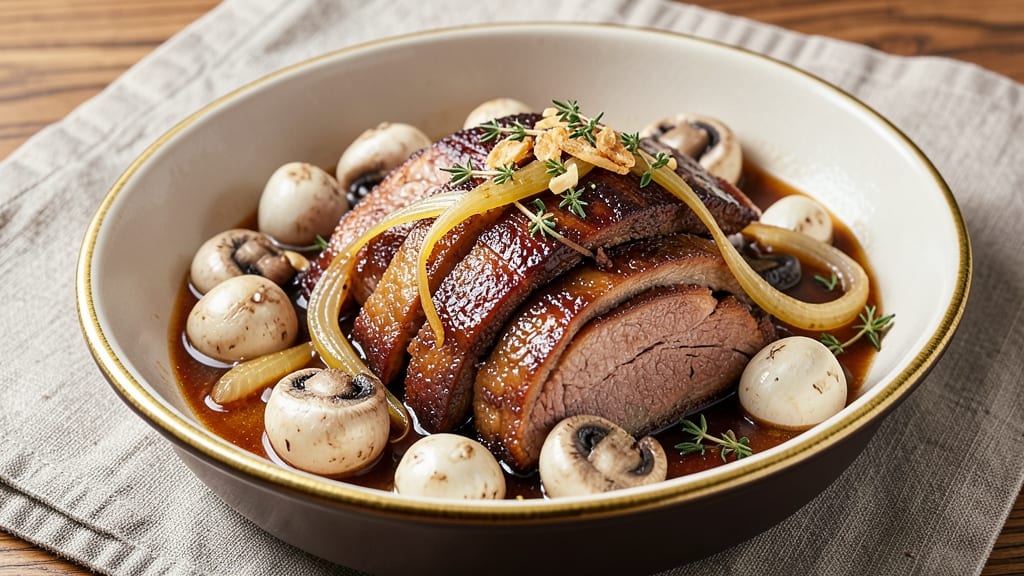
This braised pork belly with mushrooms recipe transforms tough cuts into melt-in-your-mouth perfection through slow, patient cooking. The secret lies in layering flavors—caramelized onions, rich mushrooms, and a deep red wine reduction—that infuse the pork belly with deep umami richness while keeping it irresistibly tender.
I first perfected this technique during my apprenticeship in Charleston, where slow-cooked pork became an art form that defined Southern comfort food.
The beauty of this method is its simplicity: just a few high-impact ingredients and hours of gentle braising create a dish that feels luxurious yet approachable.
We start with thick-cut pork belly, searing it to render fat before building layers of aromatic vegetables and mushrooms that cook down into a velvety sauce. The key is patience—low heat and time work together to break down collagen, turning tough meat into something so tender it practically falls apart.
What you’ll end up with is a restaurant-worthy centerpiece that smells like home the moment it hits the table. The pork belly emerges glistening and caramelized, its edges crisped from the braising liquid, while the mushrooms add earthy depth and texture.
This isn’t just a recipe; it’s a technique that elevates humble ingredients into something unforgettable—perfect for feeding a crowd or treating yourself to a Sunday supper that feels like a celebration.
Whether you’re using a Dutch oven on the stove or a slow cooker for hands-off cooking, the principle stays the same: time and temperature are your allies. The result is a dish that pairs beautifully with crusty bread to soak up every last drop of that rich, mushroom-infused sauce.
Let’s get started—your taste buds will thank you.
Ingredients for braised pork belly with mushroom
Thick-cut pork belly, earthy mushrooms, and bold red wine create restaurant-quality depth with just these 14 ingredients.
| Ingredient | Amount | Notes |
|---|---|---|
| Pork Belly 🥓 | 2 lb | Thick-cut, skin-on preferred |
| White Mushrooms 🍄 | 1 ½ lb | Cream or baby bella work too |
| Yellow Onion 🧅 | 1 whole | Sliced into even rounds |
| Red Wine 🍷 | 1 ½ cups | Bold dry variety like Cabernet |
| Garlic Cloves 🧄 | 6 cloves | Minced for even distribution |
| Tomato Paste 🍅 | 2 tbsp | Squeeze tube preferred |
| Olive Oil 🫒 | ½ cup | Extra-virgin for richness |
| Balsamic Vinegar 🍶 | 1 tbsp | For depth of flavor |
| Fresh Thyme 🌿 | ¼ cup | Leaves only, chopped |
| Bay Leaves 🍃 | 2 whole | Fresh preferred |
| Salt 🧂 | 1 ½ tsp | Kosher or sea salt |
| Black Peppercorns 🌶️ | 1 tsp | Freshly cracked |
| Beef Broth 💧 | 1 cup | Low-sodium preferred |
| Crusty Bread 🍞 | 1 loaf | For serving, optional |
The pork belly is non-negotiable here—thick-cut with skin-on gives you that crispy exterior and maximum fat for braising. Most butchers will cut it for you, but if you're buying a whole piece, ask for 2-pound slabs. Whole Foods or your local butcher shop are best for quality cuts. For the mushrooms, cremini or baby bella add more earthiness than white, but use what's on sale—Trader Joe's often has great prices. The red wine should be bold and dry; Cabernet Sauvignon or Merlot work perfectly, but whatever's open in your cabinet will do just fine.
No red wine? Substitute beef broth with 1 tablespoon balsamic vinegar—it won't be identical, but you won't taste the difference. Fresh thyme is ideal, but dried works at one-third the amount. If tomato paste feels like overkill for two tablespoons, those little squeeze tubes at Trader Joe's are perfect—they're concentrated and last forever. The onions can be yellow or red, but yellow has more natural sweetness that caramelizes beautifully. For the beef broth, low-sodium is critical—you don't want to over-salt your dish.
This dish tastes even better the next day once all the flavors meld together. Store leftovers in an airtight container in the fridge for up to 5 days, or freeze portions for 3 months. I always make extra because it reheats beautifully—just warm it gently on the stove with a splash of water or broth. The crusty bread is purely for serving; grab a baguette from the bakery section the same day you cook this. It's worth the extra minute to toast it before serving—trust me on that.
Why You'll Love This Recipe
- One-Pan Magic: I swear by this recipe when I’m too tired to dirty multiple dishes. Sear the pork belly, toss in sliced onions and mushrooms, deglaze with red wine—boom. One pan, minimal cleanup, and still feels like a restaurant dish.
- Deep Umami Bomb: That pork belly? It gets ridiculously tender, falling apart at the touch of a fork, while the mushrooms soak up all the garlic and wine reduction. The first bite is like a hug for your taste buds—salty, rich, with just enough acidity to cut through it.
- Leftovers That Win: Between us, this dish only gets better the next day. The flavors meld into something even more complex, and reheating is a breeze. I make a double batch on Sundays because my kids beg for it all week—no takeout needed.
- Budget Luxury: Pork belly feels fancy, but it stretches far when you braise it. A single slab feeds four, and the mushrooms add depth without breaking the bank. Honestly, it’s my go-to for impressing guests without stressing over a gourmet menu.
Step-by-step instructions for braised pork belly with mushrooms
A rich, one-pot wonder that transforms tough pork belly into melt-in-your-mouth perfection.
Render the Pork Belly Fat Until Golden
Cut the 2 lb pork belly into 1-inch thick slices, leaving the skin intact. Heat 0.5 cup olive oil in a heavy Dutch oven over medium-low heat. Lay the pork belly slices skin-side down and let them render undisturbed for 20 minutes. This slow rendering creates crispy skin while melting the fat, which will later baste the meat.
After 20 minutes, carefully flip the pork belly slices and cook for another 15 minutes until the fat is rendered and the meat begins to brown. The skin should be deep golden and slightly crispy, while the meat underneath remains tender. If the fat starts smoking, reduce the heat slightly—you want it to bubble gently, not burn.
Sear Aromatics and Build the Braising Base
Remove the pork belly from the pot and set it aside. In the same Dutch oven, add 0.5 cup olive oil (if needed) and increase heat to medium-high. Add the 1 whole yellow onion, sliced into even rounds, and cook for 5 minutes until softened and lightly caramelized. Stir occasionally to prevent burning.
Add the 6 cloves garlic cloves, minced, and cook for 30 seconds until fragrant. Stir in the 2 tbsp tomato paste and cook for 1 minute to deepen its flavor. Pour in the 1.5 cups red wine and scrape up any browned bits from the bottom of the pot—this releases layers of flavor that will infuse the braise.
Braise the Pork Belly with Mushrooms and Herbs
Return the pork belly to the pot, skin-side up. Add the 1.5 lb white mushrooms, sliced, the 0.25 cup fresh thyme, 2 whole bay leaves, 1.5 tsp salt, and 1 tsp black peppercorns. Pour in the 1 cup beef broth and 1 tbsp balsamic vinegar, then bring to a gentle simmer. The liquid should come about halfway up the sides of the pork belly slices.
Cover the pot and transfer to a 325°F oven. Braise for 2.5 hours, turning the pork belly slices occasionally to ensure even cooking. The pork belly is done when it’s fork-tender and the skin is deeply caramelized. If the liquid reduces too much, add a splash of water or broth to keep it moist.
Finish and Serve with Crusty Bread
Remove the pork belly from the pot and let it rest for 10 minutes before slicing. The braising liquid should now be rich, thick, and deeply flavorful. Skim off any excess fat from the surface if desired. Serve the pork belly slices with the braising sauce spooned over the top, accompanied by the 1 loaf crusty bread for soaking up every last drop.
Each bite should deliver a perfect balance of crispy skin, tender meat, and umami-rich sauce. The mushrooms add an earthy depth, while the red wine and balsamic vinegar tie everything together. This dish tastes even better the next day, so plan ahead—it’s worth the wait!
Pro Tips For Making Braised Pork Belly With Mushroom
- CRISP THE BELLY FIRST: Skip the rush to braise—sear the pork belly in a screaming-hot pan until the fat renders and the meat turns golden brown. I used to think low-and-slow meant skipping this, but the crust locks in flavor and keeps the belly from turning greasy later. (Yes, even if you’re impatient like me.)
- SLICE MUSHROOMS THIN: White mushrooms release water like crazy when cooked, so slice them paper-thin—about 1/8-inch slices—so they soften without turning soggy. I learned this the hard way after serving mushy mushrooms in what was otherwise a perfect dish.
- DEGLAZE WITH WINE IMMEDIATELY: As soon as you pull the pork belly out of the pan, splash in the red wine and scrape every last bit of browned bits off the bottom. Those bits are pure flavor, and letting them sit too long just burns them. (Your future self will notice the difference.)
- LOW AND SLOW WINS: After searing, cover the pan and simmer on the lowest heat setting your stove has—even if it takes 3 hours instead of 2. I used to crank the heat to speed things up, but the pork belly ends up dry and the mushrooms mushy. Patience here makes all the difference.
Storing and reheating this dish
Refrigerator Storage
Let your braised pork belly cool completely before transferring to an airtight container—I use glass Pyrex with snap-on lids to maintain freshness. Store in the fridge at 40°F or below for up to 5 days.
The flavors actually deepen overnight as the mushrooms and pork belly meld together beautifully. Just reheat gently to avoid drying out the meat. ❄️
Freezer Preservation
For longer storage, freeze portions in quart-sized freezer bags—leave 1 inch of headspace to prevent expansion cracks. Label with the date, as this dish freezes beautifully for up to 3 months.
I recommend portioning into single servings so you can thaw only what you need. The texture remains tender when reheated properly. ❄️
Stovetop Reheating
My preferred method is reheating on the stovetop to preserve moisture. Place pork belly slices in a skillet with 2 tablespoons of the braising liquid and warm over medium-low heat for 10-12 minutes.
Add a splash of beef broth if the sauce seems too thick. The skin will crisp up again, and the mushrooms will soften perfectly. 🔥
Slow Cooker Revival
For hands-off reheating, transfer the pork belly and sauce to a slow cooker on low heat for 2-3 hours. This method works especially well if you've stored the dish in its braising liquid.
The gentle heat keeps everything tender without overcooking. Just stir occasionally to distribute the heat evenly. 💫
Microwave Method
When you're in a hurry, use the microwave—but proceed with caution. Cover the pork belly with a damp paper towel and heat in 1-minute intervals on 50% power until reaching 165°F internal temperature.
Add 1 tablespoon of water or broth to prevent drying. This method works best for quick lunches but won't restore the skin's crispiness. ⏰
Sauce Refresh
If the braising sauce seems too thick after reheating, simply add 1-2 tablespoons of water or broth and warm through. For extra richness, stir in 1 teaspoon of butter or a splash of red wine to brighten the flavors.
The sauce should coat the back of a spoon—this is the sign of a properly reheated dish. 💡
Nutrition facts
Frequently asked questions
Can I use pork shoulder instead of pork belly?
While pork shoulder will work, it won't give you the same luxurious texture. Pork belly has more fat that renders beautifully, creating crispy skin and tender meat. If you must substitute, use thick-cut pork shoulder and increase braising time to 3 hours to ensure tenderness. The flavor will be slightly leaner, but still delicious with the mushroom sauce.
What's the best way to make this dish in a slow cooker?
For a slow cooker version, start by searing the pork belly and aromatics in a skillet first. Then transfer everything to the slow cooker with the mushrooms, wine, broth, and herbs. Cook on low for 6-8 hours or high for 4-5 hours. The key is patience—the longer it cooks, the more tender the pork becomes. Add a splash of water if the liquid gets too thick.
How do I know when the pork belly is fully cooked?
The pork belly is done when it reaches an internal temperature of 195°F and is fork-tender. The skin should be deep golden and crispy, while the meat underneath should pull apart easily. If you're unsure, cut into a small piece—if it's translucent and tender, it's ready. Don't overcook, or the skin may become tough.
Can I add other vegetables to this recipe? Try adding carrots, celery, or fennel for extra depth. Just
Why does my braising liquid turn cloudy?
Cloudiness usually means the liquid didn't reduce enough or the fat wasn't properly rendered. Skim off excess fat and reduce the sauce on the stovetop for 5-10 minutes to thicken it. If the cloudiness persists, it might be from overcooked mushrooms—strain the sauce through a fine-mesh sieve to clarify it. A properly reduced sauce should coat the back of a spoon.