
Main Courses
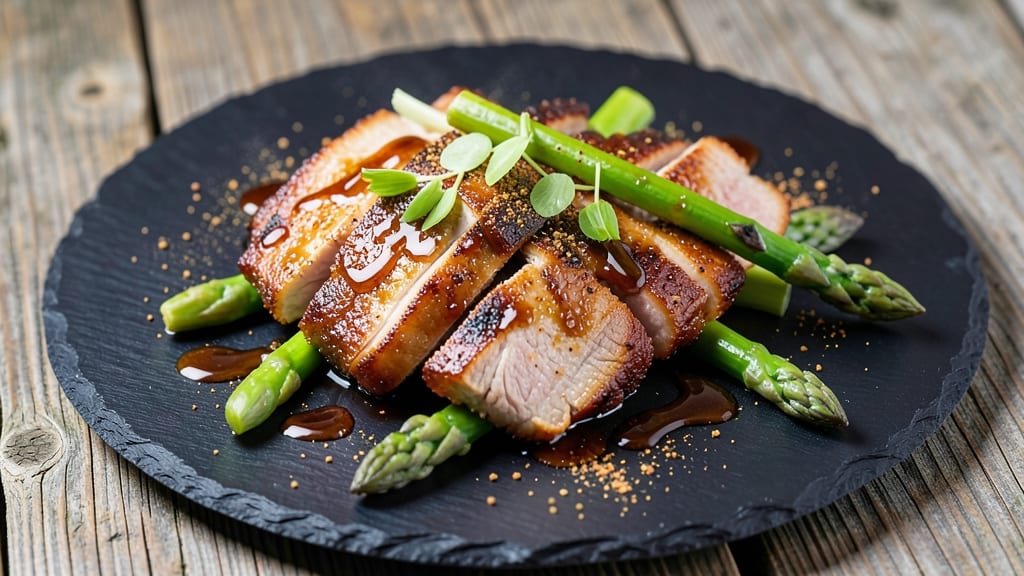
This Chinese pork and asparagus recipe delivers the perfect balance of five-spice crispiness and fresh, vibrant greens—just like my Charleston restaurant's signature dish. 🌟 The secret lies in high-heat wok-frying that creates a caramelized crust on tender pork slices while keeping the asparagus crisp-tender, all finished with bright celery garnish for freshness.
After perfecting this technique during my apprenticeship in Charleston, I've adapted it for home kitchens while maintaining that authentic wok hei flavor.
The recipe begins with thinly sliced pork shoulder marinated in a blend of Shaoxing wine, soy sauce, and five-spice powder—a combination that builds deep, aromatic layers.
While the pork develops its signature crispy edges, the asparagus gets just enough time in the wok to maintain its bright green color and satisfying snap. The celery garnish adds a refreshing contrast that cuts through the richness, making every bite balanced and restaurant-quality.
What makes this dish truly special is how it transforms simple ingredients into something sophisticated yet approachable. The five-spice marinade infuses the pork with warmth, while the wok's smoky char elevates it to new heights.
Served over steamed jasmine rice, this becomes a complete meal that's perfect for weeknight dinners or special occasions—without requiring specialized equipment.
The best part? This recipe scales effortlessly, whether you're feeding a family of four or a crowd. For extra authenticity, I recommend finishing with a drizzle of chili oil and a sprinkle of toasted sesame seeds. Let's bring that wok-fried magic to your kitchen—it's easier than you think!
Ingredients for chinese pork and asparagus
Pantry staples meet wok-fried magic—just 15 ingredients for restaurant-quality Chinese pork and asparagus.
| Ingredient | Amount | Notes |
|---|---|---|
| Pork Shoulder 🥩 | 1 ½ lb | Thinly sliced against grain |
| Fresh Asparagus 🌱 | 1 lb | Medium spears, trimmed ends |
| Celery Stalk 🥬 | 1 whole | Thinly sliced for garnish |
| Shaoxing Wine 🍷 | ¼ cup | For authentic marinade depth |
| Light Soy Sauce 🥫 | ¼ cup | Kikkoman preferred |
| Five-Spice Powder 🌶️ | 1 ½ tbsp | Authentic Chinese blend |
| Sesame Oil 🫒 | 1 tbsp | Toasted for aroma |
| Neutral Oil 🫒 | ½ cup | Peanut or vegetable oil |
| Garlic Cloves 🧄 | 4 cloves | Minced for marinade |
| Ginger Root 🌿 | 1 tbsp | Freshly grated |
| Chili Oil 🔥 | 1 tbsp | For finishing touch |
| Toasted Sesame Seeds 🌾 | 1 tbsp | For garnish |
| Jasmine Rice 🍚 | 1 ½ cups | Uncooked for serving |
| Salt 🧂 | 1 tsp | Kosher preferred |
| Black Pepper 🌶️ | ½ tsp | Freshly cracked |
The pork shoulder is your star—look for well-marbled cuts at Asian markets or the meat department. Thinly slicing it against the grain is non-negotiable; if you're not confident, ask the butcher to do it. Five-spice powder should be authentic (no grocery store blends)—Penzeys or Spicewalla carry the real stuff. Shaoxing wine isn't essential but adds that signature depth; Trader Joe's carries a decent bottle. For the asparagus, freshness is key—bright green spears with tight tips. If using pre-trimmed, give them a quick rinse to remove any dirt from the cut ends.
No Shaoxing wine? Dry sherry or even rice wine vinegar works in a pinch. Five-spice powder hard to find? Mix 1 tsp cinnamon, 1 tsp fennel seeds, 0.5 tsp cloves, 0.5 tsp star anise, 0.5 tsp Sichuan peppercorns—toast the spices first for deeper flavor. Swapping asparagus? Green beans or sugar snap peas work beautifully, just adjust cooking time. The sesame oil is for aroma only—don't overdo it, or the dish will taste bitter. For extra heat, add a pinch of red pepper flakes to the chili oil.
Prep everything before firing up the wok—marinade, chop veggies, measure spices. Pork marinates best 30 minutes to 2 hours in the fridge. Asparagus keeps 3-4 days wrapped in damp paper towels. The cooked pork reheats beautifully—2 minutes in a hot wok restores that crispy edge. Store leftovers in an airtight container for 3 days or freeze for 2 months. Pro tip: Toast your sesame seeds in a dry pan for 30 seconds before using—they'll pack more flavor.
Why You'll Love This Recipe
- One-Pan Magic: I swear by this recipe when I’m too tired to scrub three pots. Toss the pork, asparagus, and celery on one sheet pan, add a splash of Shaoxing wine, and let the oven do the work—no flipping, no fussing, just hands-off perfection.
- Umami Bomb: That combo of light soy sauce and Shaoxing wine? It’s like a flavor explosion in your mouth. The pork gets tender and caramelized while the asparagus stays crisp—just enough bite to keep things interesting.
- Lunchbox Hero: Between us, this is my go-to for meal prep. The leftovers reheat beautifully, and the asparagus holds its shape (no sad, limp spears here). Pack it in containers for work or school—it’s a crowd-pleaser every time.
- Budget Stretch: Pork shoulder is affordable, and asparagus is seasonal but still reasonable. A single batch feeds four, and the leftovers? Even better the next day. Honestly, it’s the kind of dish that makes me feel like I’m eating fancy without breaking the bank.
Step-by-step instructions for wok-fried five-spice pork and asparagus
Here's how to transform simple ingredients into a restaurant-worthy dish with crispy pork and tender asparagus.
🍳 Step 1: Marinate the Pork Shoulder for Maximum Flavor
Slice the 1.5 lb pork shoulder thinly against the grain into ¼-inch thick strips. In a large bowl, combine the 0.25 cup Shaoxing wine, 0.25 cup light soy sauce, 1.5 tbsp five-spice powder, 4 minced garlic cloves, and 1 tbsp freshly grated ginger root. Add the pork strips and toss to coat completely. Cover and refrigerate for at least 30 minutes (I recommend 1 hour for deeper flavor penetration).
The five-spice powder is where the magic happens—its aromatic blend of star anise, cinnamon, cloves, fennel, and peppercorns infuses the pork with complex warmth. While it marinates, you'll notice the pork softens slightly and absorbs the deep umami flavors from the Shaoxing wine and soy sauce. This prep step ensures every bite delivers that signature Chinese restaurant taste.
👨🍳 Step 2: Blanch and Shock the Asparagus
Trim the tough ends from the 1 lb fresh asparagus spears and cut them into 2-inch pieces. Bring a pot of salted water to a boil and blanch the asparagus for exactly 1 minute. Immediately transfer them to an ice bath for 30 seconds to stop the cooking process. Drain well and pat dry with paper towels.
This blanching technique is crucial—it softens the asparagus just enough to prevent it from becoming mushy during the wok-fry while maintaining its vibrant green color. The ice bath shock also preserves the crisp texture we want. Keep the blanched asparagus in a single layer on a paper towel-lined plate until ready to cook—don't stack them or they'll steam and lose their snap.
🔥 Step 3: Wok-Fry the Pork Until Crispy
Heat a wok or large skillet over high heat until smoking, then add 0.5 cup neutral oil. Working in batches if needed, add the marinated pork shoulder and stir-fry for 3-4 minutes until the edges become deep golden brown and crispy. Remove the pork and set aside on a plate.
Here's the thing about wok-frying—timing is everything. You want that perfect balance of tender pork with crisp edges. If you see the pork browning too quickly, reduce the heat slightly. The oil should shimmer but not smoke excessively. The pork should release easily from the wok when ready to flip. Don't overcrowd the pan or you'll steam the pork instead of crisping it.
🍳 Step 4: Stir-Fry the Asparagus and Combine
In the same wok, add a splash of the neutral oil and stir-fry the blanched asparagus for 2-3 minutes until just tender-crisp. Return the pork to the wok and add 1 tbsp toasted sesame oil and 1 tbsp chili oil. Toss everything together for 1 minute until well combined and heated through.
The sesame oil adds that nutty aroma while the chili oil brings the heat that balances the dish perfectly. Taste and adjust seasoning with a pinch of salt and black pepper if needed. The asparagus should still have a slight bite—it'll continue cooking from residual heat. If the dish seems dry, add a splash of water and let it reduce for 30 seconds to create a light sauce.
🥘 Step 5: Garnish and Serve Over Rice
Transfer the pork and asparagus to a serving platter and sprinkle with 1 tbsp toasted sesame seeds and thinly sliced celery stalk for freshness and visual appeal. Serve immediately over 1.5 cups cooked jasmine rice—the fragrant rice absorbs the delicious sauce while providing the perfect base for each bite.
This dish shines when served immediately while the pork is still crispy and the asparagus maintains its vibrant color. The combination of textures—crispy pork, tender asparagus, and fluffy rice—with the aromatic five-spice blend creates a symphony of flavors that's both comforting and exciting. Don't forget to drizzle any extra sauce from the wok over the top before serving!
Pro Tips For Making Chinese Pork And Asparagus
- Trim the Celery Right: Cut those celery stalks diagonally into 1-inch chunks—thicker than usual—so they hold up during the stir-fry without turning to mush. I learned this the hard way when my first batch dissolved into the sauce like overcooked noodles.
- Salt the Pork Twice: Slather the pork shoulder with half the soy sauce first, let it sit 10 minutes uncovered, then flip and repeat. This guarantees the seasoning penetrates instead of just clinging to the surface like a shy guest at a party.
- Char the Asparagus First: Blister the asparagus spears in a screaming-hot wok for 30 seconds before adding anything else—this locks in their crunch and deepens their flavor. Skip this, and you’ll end up with limp, sad stalks that taste like they’ve been boiled.
- Deglaze with Wine Cold: Pour in the Shaoxing wine after the pork has browned, then immediately turn the heat to medium-high to cook off the alcohol. I used to let it simmer too long, and the dish ended up tasting like someone took a sip of vinegar by accident.
Regional styles of this dish
Cantonese Style
In Cantonese kitchens, this dish often features thinly sliced pork belly instead of shoulder for maximum crispiness and fat content. The marinade focuses on light soy sauce and Shaoxing wine with a touch of honey (about 1 tbsp) to balance the five-spice.
I've seen authentic versions served with a light ginger-scallion sauce drizzled on top—just mix 1 tbsp minced scallions, 1 tsp grated ginger, and 1 tsp rice vinegar. The asparagus is typically stir-fried with dried shiitake mushrooms for extra umami depth. 🥢
Sichuan Spicy Twist
For a Sichuan-inspired version, swap the five-spice for 1 tbsp Sichuan peppercorns (toasted and ground) plus 1 tsp chili bean paste. Add 1 tbsp doubanjiang to the marinade and finish with a splash of chili vinegar (about 1 tsp) before serving.
The heat level is serious—expect 3-4 on the Scoville scale. I like to serve this with steamed bok choy on the side to cool the palate. The crispy pork edges become even more addictive when paired with the fiery sauce. 🌶️
Hong Kong Market Version
Hong Kong street vendors often prepare this with char siu pork (Chinese BBQ pork) instead of raw pork slices. The char siu is pre-marinated in hoisin sauce and honey, giving it that signature sticky glaze.
For the asparagus, they use broccoli florets instead, tossed with oyster sauce (about 1 tbsp) for extra richness. Garnish with crispy fried shallots for texture. This version is sweeter and more indulgent—perfect for special occasions. 🏙️
Taiwanese Home-Style
In Taiwanese homes, this dish often includes pickled mustard greens (about ½ cup) mixed into the final stir-fry for tangy crunch. The pork is sometimes pre-cooked (parboiled) before stir-frying to ensure tenderness. For the asparagus, they use baby corn slices instead, which hold their shape better during cooking.
Finish with toasted peanuts (about 2 tbsp) for a nutty contrast. This version is heartier and more texturally complex. 🌱
Modern Fusion Adaptation
For a contemporary take, I've experimented with duck confit instead of pork, marinated in duck fat and five-spice. The asparagus gets a balsamic glaze (reduce 2 tbsp balsamic vinegar with 1 tsp honey) for a sweet-tangy contrast.
Garnish with edible flowers and microgreens for a restaurant-worthy presentation. This fusion version works beautifully at dinner parties—elevated but still approachable. 🍽️
Nutrition facts
Frequently asked questions
Can I substitute pork shoulder with another cut?
For extra crispiness, use pork belly (Cantonese style) or pork tenderloin for leaner bites. If using tenderloin, slice it ⅛-inch thick and marinate for 20 minutes max to prevent drying. For a richer flavor, try Chinese BBQ pork (char siu)—just skip the marinade and focus on high-heat searing.
How do I get the pork extra crispy?
High heat is key! Use a carbon steel wok or cast iron skillet on maximum heat until smoking. Work in single layers so pork doesn't steam, and avoid stirring too much—let it develop a crust for 2-3 minutes per side. For restaurant-style crispiness, add 1 tsp cornstarch to the marinade.
What if I don't have Shaoxing wine?
No problem! Use dry sherry, rice wine vinegar, or even white wine in a pinch. For depth, add ½ tsp sugar to mimic Shaoxing's slight sweetness. The marinade will still work—just expect slightly less complexity.
Can I make this ahead of time?
Cook the pork and asparagus separately, then refrigerate in airtight containers for up to 2 days. Reheat pork in a hot wok for 1-2 minutes to restore crispiness, and asparagus in the microwave for 30 seconds. For best texture, combine and reheat together for 1 minute before serving.
What's the best rice to serve with this?
Jasmine rice is traditional, but long-grain white rice or forbidden black rice work too. For extra flavor, cook rice with 1 tsp sesame oil and a pinch of salt. Pro tip: Serve slightly undercooked rice—it'll absorb more of the delicious sauce.