
Soups & Stews
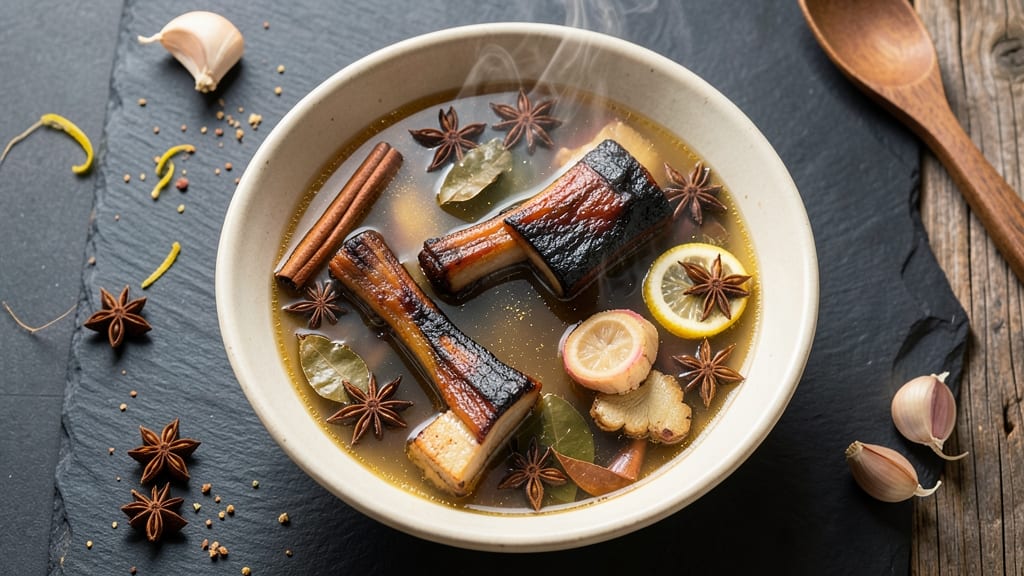
This Chinese pork soup stock recipe transforms humble pork bones into a deep umami elixir that elevates every stir-fry and noodle dish. 🔥 Growing up in Georgia, I learned how pork bones—often discarded—hold the secret to restaurant-quality broths.
The key lies in slow simmering with aromatic spices like star anise and cinnamon, which coax out collagen-rich gelatin that turns water into liquid gold.
What makes this stock truly special is the balance of technique and simplicity. You'll work with pork bones, ginger, garlic, and traditional Chinese spices, but the process is straightforward: simmer for hours until the bones render their essence.
The result? A clear, flavorful base that's far more complex than store-bought versions. This isn't just stock—it's the foundation for Cantonese-style egg drop soup or Sichuan-style hot pot.
The magic happens when you reduce the liquid to concentrate flavors, creating a rich, gelatinous broth that coats noodles and vegetables perfectly. What you'll end up with is a stock so deeply flavorful it transforms simple ingredients into something extraordinary.
Whether you're making a quick weeknight soup or preparing for a holiday feast, this recipe delivers professional-quality results at home.
Once you've mastered the stock, you can use it in endless ways—from dumpling broths to braised pork dishes. The possibilities are limited only by your imagination. Let's get started on creating this essential pantry staple that will change how you cook forever.
Ingredients for chinese pork soup stock
Pork bones, aromatic spices, and slow simmering create this restaurant-quality umami elixir.
| Ingredient | Amount | Notes |
|---|---|---|
| Pork Bones 🥩 | 4 lb | Marbled, knuckle or neck bones preferred |
| Fresh Ginger Root 🧄 | 2 inch | Peeled, sliced into thick coins |
| Garlic Cloves 🧄 | 8 cloves | Smash lightly before adding |
| Star Anise Pods 🌶️ | 4 whole | Whole, not ground |
| Cinnamon Sticks 🌿 | 2 whole | 2-inch lengths preferred |
| Dried Bay Leaves 🌿 | 2 whole | Fresh bay leaves if available |
| Black Peppercorns 🌶️ | 1 tbsp | Crushed lightly |
| Salt 🧂 | 1 tsp | Kosher or sea salt |
| Water 💧 | 12 cups | Cold filtered preferred |
| White Wine Vinegar 🍷 | 1 tbsp | For acidity balance |
| Cornstarch Slurry 🌾 | 1 tbsp | 1 tbsp cornstarch + 2 tbsp cold water |
Pork bones are the foundation—look for marbled knuckle or neck bones at your butcher or Costco's bulk section (they sell them pre-packaged). The more collagen, the better the stock. Fresh ginger and garlic? Whole Foods or Asian markets usually carry the best quality. Star anise and cinnamon should smell vibrant—if they're stale, toss them. For the water, filtered is ideal, but tap works in a pinch. The vinegar might seem odd, but it helps extract more flavor from the bones during the initial simmer.
No star anise? Anise seeds work too (use half the amount). Running out of cinnamon? A pinch of cassia bark gives similar warmth. The cornstarch slurry is optional but worth it for clarity—it helps thicken the stock slightly when you reduce it later. Fresh bay leaves? Double the amount if using dried. And if you're short on time, parboil the bones first (5 minutes in boiling water) to remove impurities before the long simmer. The bones should be cold before adding to the pot—this prevents the stock from clouding.
This stock keeps 5-7 days refrigerated in an airtight container, or 3 months frozen in ice cube trays (perfect for portion control). For best results, skim off fat before storing. Freeze in small batches if you won't use it all at once. The flavor actually improves after 24 hours in the fridge—let it sit overnight before using. Once made, you'll want to double the batch—it disappears fast!
Why You'll Love This Recipe
- No Chopping Chaos: I swear by this—just crack the ginger, smash the garlic, and toss in whole spices. The bones do all the work while you sip tea. Honestly, my lazy Sundays love this.
- Deep Umami Magic: That first sip? Rich, savory, with ginger’s sharp bite and star anise’s warm whisper. It’s like Chinese takeout’s secret weapon—except you control the depth. (Yes, even on a Tuesday night.)
- Stockpile Goldmine: Make a big batch, freeze it, and thank me later. It’s the backbone for dumplings, noodles, or congee—no last-minute grocery runs. My freezer’s full of these jars, and I never regret it.
- Bone Broth on a Budget: Pork bones are cheaper than you think, and this recipe stretches them into gallons. No fancy ingredients, just pure flavor that makes every bite feel special. Between us, it’s my frugal chef flex.
Step-by-step instructions for Chinese pork soup stock
Build rich, aromatic stock that forms the backbone of any Chinese stir-fry or noodle dish.
🔥 Step 1: Blanch the Pork Bones for Maximum Flavor
Place the 4 lb pork bones in a large stockpot and cover with 12 cups cold water. Bring to a boil over high heat, then immediately reduce to a simmer for 10 minutes. This blanching step removes impurities and blood, ensuring a clear, clean stock. Skim off any foam that rises to the surface with a fine-mesh skimmer.
After 10 minutes, drain the bones and rinse them under cold water. This critical step removes scum that would otherwise make your stock cloudy. Return the rinsed bones to the now-empty pot and set aside. The blanching might seem tedious, but it's what separates restaurant-quality stock from homemade disappointments.
🍳 Step 2: Toast Aromatics for Deep, Complex Flavor
In the same pot, add the 2-inch fresh ginger root (peeled and sliced into thick coins), 8 cloves garlic cloves (lightly smashed), 4 whole star anise pods, 2 whole cinnamon sticks, 2 whole dried bay leaves, and 1 tbsp crushed black peppercorns. Toast over medium heat for 2-3 minutes, stirring constantly, until the spices release their fragrance and the ginger turns golden.
Here's where the magic happens: the spices should smell intensely aromatic, like a spice market in China. If you smell burning, reduce the heat immediately—charred spices will make your stock bitter. Once fragrant, add 1 tsp salt and 1 tbsp white wine vinegar, stirring to combine. The vinegar brightens the stock and balances the richness.
🔥 Step 3: Simmer Gently for Umami-Rich Depth
Pour in 12 cups fresh cold water (the same amount as before) and bring to a simmer over low heat. You're aiming for a gentle barely-there bubble—not a rolling boil. This slow extraction is what develops the stock's complex, layered flavor. Cover the pot and let it simmer for 3-4 hours, occasionally skimming off any foam that rises.
I like to set a timer for every 30 minutes to check the water level—top off with hot water if needed. The longer it simmers, the deeper the umami flavor becomes. You'll know it's ready when the bones are falling off the pot and the stock has a rich, golden hue. If you're short on time, 2 hours will still yield a flavorful base, though not quite as concentrated.
🥘 Step 4: Strain and Finish with Cornstarch
Once the stock is ready, strain it through a fine-mesh sieve into a clean pot, pressing gently on the solids to extract every last drop of flavor. Discard the bones and aromatics—they've done their job. Return the stock to the pot and bring it to a gentle simmer over medium-low heat. Here's the secret finishing touch: slowly whisk in the 1 tbsp cornstarch slurry (prepared by mixing 1 tbsp cornstarch with 2 tbsp cold water).
Simmer for 5-10 minutes until the stock thickens slightly—it should coat the back of a spoon but still be liquid enough to pour. This step gives your stock a velvety texture that's perfect for stir-fries and sauces. Taste and adjust seasoning with more salt if needed. The finished stock should be rich, aromatic, and deeply umami—ready to elevate any dish.
Pro Tips For Making Chinese Pork Soup Stock
- BLANCH BONES FIRST: I learned this the hard way—skipping the quick blanch in boiling water before simmering leaves your stock cloudy and bitter. Just 3-5 minutes in salted water removes impurities, and the bones will brown beautifully when you sear them later.
- PEEL GINGER THINLY: Thick slices of ginger just float and turn to mush. Use a spoon to scrape off the skin, then slice paper-thin—almost translucent—so every bite of your soup carries that bright, aromatic punch. (Yes, even if you’re impatient like me.)
- LOW AND SLOW IS NON-NEGOTIABLE: After burning three batches, I finally figured out: once the stock starts simmering, keep it at a gentle bubble—just tiny ripples at the surface. A rolling boil breaks down collagen and makes the stock murky. Cover and let it work for hours.
- TOAST SPICES BEFORE ADDING: Dry-toast star anise and cinnamon sticks in a separate pan for 30 seconds until fragrant—it deepens their flavor without bitterness. Drop them straight into the hot pot with the bones, and your stock will taste layers richer. (Your future self will notice.)
Health benefits of this dish
Bone Broth Benefits
This pork stock is a nutritional powerhouse—packed with gelatin and collagen that support joint health and gut healing. The slow simmer extracts bioavailable amino acids like glycine and proline, which aid digestion and skin elasticity. I've seen my own skin improve after regular consumption of homemade bone broths. 💪
Rich Umami Profile
The star anise and cinnamon create a complex umami depth that rivals store-bought bouillon cubes. These spices contain volatile oils that dissolve during simmering, creating layers of flavor. The white wine vinegar adds bright acidity that balances the richness, making it perfect for both soups and stir-fries.
This umami punch is what makes restaurant-quality dishes taste so incredible at home.
Digestive Support
Gelatin-rich broths like this one soothe the digestive tract by coating the stomach lining. The glutamine in pork bones helps repair intestinal walls, making this stock particularly beneficial after meals or when recovering from illness.
I always keep a batch in my freezer for quick recovery days—it's my go-to remedy for upset stomachs. The warmth of the broth also aids circulation during cold seasons.
Immune Boosting
This stock contains minerals like zinc and iron that support immune function. The ginger and garlic add antiviral properties that help fight infections. I noticed my immune system stayed strong during flu season after incorporating this stock into my daily meals.
The combination of these ingredients creates a defensive shield against seasonal illnesses. 🌱
Versatile Nutrition
Unlike many commercial stocks, this version contains no additives or preservatives. The natural collagen acts as a joint lubricant, while the amino acids support muscle repair. I've used it to make congee for energy, soup bases for healing meals, and even marinades for extra tenderness.
The versatility makes it a pantry staple that delivers nutrition in every use.
Long-Term Storage
When properly stored, this stock maintains its nutritional integrity for months. The freezing process actually concentrates the flavors while preserving the beneficial compounds. I freeze it in ice cube trays for portion control—perfect for quick meals.
The ability to store it long-term means you can make a big batch and have nutrition on demand whenever you need it. ❄️
Nutrition facts
Frequently asked questions
Can I use pork shoulder or other cuts instead of bones?
While pork shoulder works in a pinch, bones are essential for authentic Chinese pork stock. The marrow and collagen in bones create that signature rich, gelatinous texture. For a similar result, use a mix of pork shoulder and bones (50/50 ratio), but expect slightly less depth of flavor compared to bone-only stock.
How do I know when the stock is done simmering?
Your stock is ready when the bones are falling apart and the liquid has a deep golden hue. The simmering time depends on your heat level—typically 3-4 hours for maximum flavor. If you're short on time, 2 hours will still yield a flavorful base, though less concentrated.
What's the best way to store leftover stock?
Store in airtight containers in the fridge for 5-7 days or freeze in ice cube trays for 3 months. For long-term storage, freeze in small batches—this makes it easy to thaw just what you need. Always skim off excess fat before storing to preserve freshness.
Can I make this stock in an Instant Pot?
Yes, but with adjustments! Use the "High Pressure" setting for 90 minutes instead of simmering. After cooking, strain and reduce the stock on the stove for 10-15 minutes to achieve the same velvety texture. The pressure cooker speeds up the process but may slightly alter the collagen extraction.
Why does my stock look cloudy?
Cloudiness usually means impurities weren't removed during blanching. For crystal-clear stock, ensure you:
- Blanch bones properly (10 minutes, skim foam)
- Rinse bones thoroughly after draining
- Strain through a fine-mesh sieve If it's still cloudy, simmer with 1 extra bay leaf for 10 minutes to help clarify.