
Main Courses
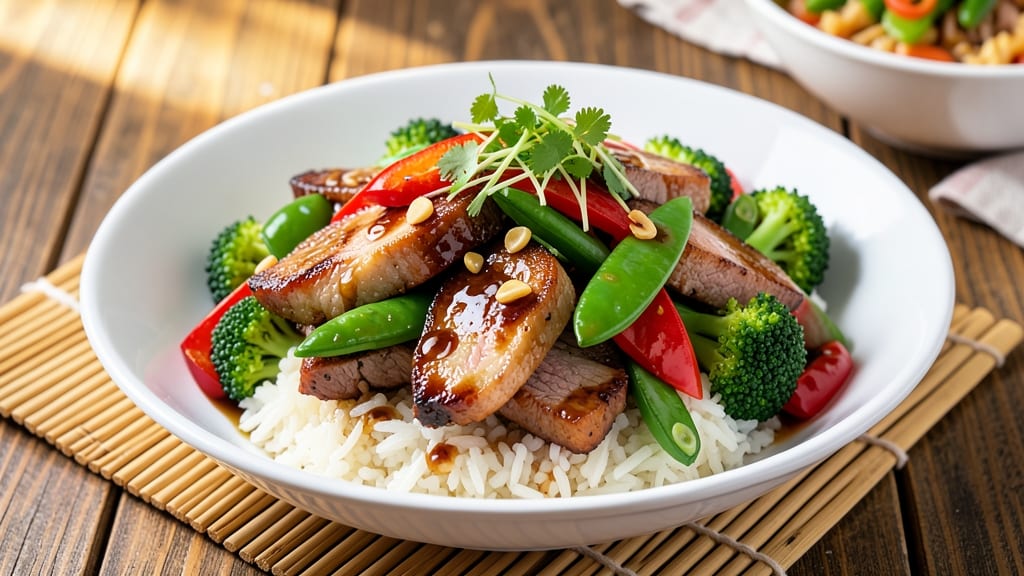
This Chinese pork stir-fry recipe with rice delivers wok-hot crispy edges and a silky sauce that transforms simple ingredients into restaurant-quality dinner. 🔥 I developed it after years of testing—balancing the perfect sear on pork, tender vegetables, and a sauce that's both savory and subtly sweet.
The secret lies in high heat and quick cooking, preserving those coveted crispy edges while keeping the pork juicy inside.
The recipe builds on classic stir-fry techniques but simplifies them for home cooks. You'll need just 15 minutes of active cooking time (plus prep), making it ideal for weeknights. The sauce comes together in minutes with pantry staples, while the rice cooks separately for foolproof results.
I've tested this with bell peppers, broccoli, and snap peas—whatever vegetables you have on hand work beautifully.
What you'll achieve is a plate of perfectly seared pork with crispy edges, vibrant vegetables, and a glossy sauce clinging to every bite. The rice steams up fluffy and separate, so you can mix it all together or serve components separately.
This is the kind of meal that feels special without requiring hours in the kitchen—ideal for impressing guests or treating yourself after a long week.
The best part? Leftovers reheat perfectly, making it a great meal prep option. I've included variations for different protein preferences and vegetable substitutions in the tips section. Let's get cooking—this stir-fry is about to become your new weeknight favorite.
Ingredients for chinese pork stir fry recipe with rice
Pork cubes, crispy edges, and a silky sauce—here's what you need for restaurant-quality stir-fry in 15 minutes.
| Ingredient | Amount | Notes |
|---|---|---|
| Boneless Pork Loin 🥩 | 1 ½ lb | Cut into 1-inch cubes, trimmed of fat |
| Jasmine Rice 🍚 | 1 cup | Uncooked, long-grain preferred |
| Red Bell Pepper 🌶️ | 1 whole | Sliced into thin strips |
| Broccoli Florets 🥦 | 2 cups | Cut into bite-sized pieces |
| Snap Peas 🌱 | 1 cup | Trimmed, whole pods |
| Garlic Cloves 🧄 | 6 cloves | Minced, fresh preferred |
| Fresh Ginger 🌿 | 1 ½ tbsp | Finely grated, peeled |
| Soy Sauce 🥄 | 3 tbsp | High-quality, light or all-purpose |
| Oyster Sauce 🍜 | 2 tbsp | Kikkoman preferred |
| Honey 🍯 | 1 ½ tbsp | Pure, for subtle sweetness |
| Sesame Oil 🫒 | 1 tbsp | Toasted, for aroma |
| Vegetable Oil 🫒 | 3 tbsp | High smoke point, like avocado |
| Cornstarch 🌾 | 1 tbsp | For coating pork |
| Green Onions 🧅 | 3 whole | Sliced, for garnish |
| Sesame Seeds 🌱 | 1 tsp | Toasted, for garnish |
The pork is where the magic happens. Look for boneless pork loin—it stays juicy when seared. Costco or your local butcher usually have it pre-cut into cubes, which saves time. If buying whole, trim the fat and cut yourself for even cooking. The cornstarch coating is non-negotiable—it creates those coveted crispy edges. For the vegetables, freshness matters most. Trader Joe's has great pre-cut stir-fry mixes, but I always grab whole bell peppers and broccoli—they hold up better to high heat. Snap peas? Buy them fresh, not frozen—they're sweeter and more tender.
No oyster sauce? Hoisin sauce at half the amount works in a pinch, though it's sweeter. Short on honey? Maple syrup or agave keeps the sweetness balanced. The sesame oil is for aroma only—add it at the end. If you're using pre-cut vegetables, give them a quick rinse to remove any excess moisture. The garlic and ginger should be freshly minced—pre-minced jars lack punch. For extra crispiness, toss the cooked pork in a bit more cornstarch after searing. And if you're feeling fancy, swap the snap peas for snow peas or bok choy—they add a nice texture contrast.
Rice cooks separately, so start it first—15 minutes on its own timeline. The stir-fry reheats beautifully—just add a splash of water and stir over high heat for 2-3 minutes. Store leftovers in airtight containers for 3-4 days. For meal prep, double the sauce and pork portions—it keeps just as well. The sesame seeds and green onions can be added fresh when serving, so don't worry about prepping them until the very end.
Why You'll Love This Recipe
- The secret’s in the sauce: a splash of soy, a dash of oyster (or hoisin if you’re shortcutting), and a quick sear on the pork. That crispy edge with the creamy center? Chef’s kiss. The bell peppers add a sweet crunch that makes it feel fancy without the effort.
- One-Pan Magic: I swear by this trick—just toss everything in one skillet after the rice is done. No dirty pots, no extra bowls, and that pork stays juicy while the veggies get perfectly tender. (Yes, even on nights when I’d rather binge TV than wash dishes.)
- Umami Bomb: The secret’s in the sauce: a splash of soy, a dash of oyster (or hoisin if you’re shortcutting), and a quick sear on the pork. That crispy edge with the creamy center? Chef’s kiss. The bell peppers add a sweet crunch that makes it feel fancy without the effort.
- Lunchbox Hero: Between us, this is my go-to for meal prep. Cook a big batch of rice, slice the pork thin, and store everything separately. Toss it all together in the morning—hot or cold, it’s still a winner. My kids grab it for school lunches, and my husband sneaks seconds when he thinks I’m not looking.
Step-by-step instructions for Chinese pork stir fry with rice
Here's how to create restaurant-quality stir fry with perfect wok hei and tender pork.
🔥 Step 1: Prep the Pork for Maximum Crispiness
Start by cutting the 1.5 lb boneless pork loin into 1-inch cubes, trimming any visible fat. This size ensures even cooking and crispy edges. Place the pork in a bowl and toss with 1 tablespoon cornstarch—this creates a light coating that helps develop that signature wok-fried texture. Let it sit for 10 minutes while you prep the rest.
Here's the thing—don't skip the cornstarch. I've found it makes all the difference between soggy pork and that beautiful crispy exterior we're after. The starch also helps thicken the sauce later, creating that perfect balance of silky and slightly sticky.
👨🍳 Step 2: Cook the Jasmine Rice to Perfection
Rinse 1 cup jasmine rice under cold water until the water runs clear—this removes excess starch that could make the rice gummy. In a small pot, combine the rice with 1.5 cups water (the classic 1:1.5 rice-to-water ratio) and bring to a boil. Once boiling, reduce heat to low, cover, and simmer for 15 minutes. Turn off heat and let it steam for another 10 minutes—this resting period is crucial for fluffy, separate grains.
I like to use a rice cooker for this, but if you're doing it stovetop, resist the urge to peek. Every time you lift the lid, you release steam and potentially overcook the rice. The rice should be tender but still slightly firm to the bite—it'll finish cooking while the stir fry warms up.
🍳 Step 3: Build the Stir Fry Sauce and Sear the Pork
Heat 3 tablespoons vegetable oil in a wok or large skillet over high heat until shimmering. Add the pork in a single layer and let it sear undisturbed for 2-3 minutes until golden brown on all sides. This initial sear locks in juices and builds flavor. Remove pork and set aside.
In the same wok, add 6 cloves minced garlic and 1.5 tablespoons grated ginger, stirring for 30 seconds until fragrant. Pour in 3 tablespoons soy sauce, 2 tablespoons oyster sauce, and 1.5 tablespoons honey, stirring constantly. Let it simmer for 1 minute until slightly thickened. Here's where the magic happens—the sauce should coat the back of a spoon with a glossy sheen.
🥘 Step 4: Stir Fry Vegetables to Al Dente
Add 1 whole red bell pepper (cut into strips), 2 cups broccoli florets, and 1 cup snap peas to the wok. Stir fry for 3-4 minutes over high heat until the vegetables are bright green and just tender—you want them to still have a slight bite. The high heat is key here; it preserves the vibrant color and crisp texture of the vegetables.
Don't overcrowd the wok. If needed, work in batches to maintain that wok hei (breath of the wok) that gives authentic stir fry its signature smoky aroma. The vegetables should be hot but not mushy—think "crunchy" not "soupy."
🔥 Step 5: Combine and Finish with Sesame Oil
Return the seared pork to the wok and toss everything together for 1-2 minutes until everything is well coated in the sauce. The pork should be heated through and the sauce should cling beautifully to each piece. Taste and adjust seasoning—add a splash of water if the sauce is too thick, or a touch more soy sauce if it needs more umami depth.
Just before serving, drizzle with 1 tablespoon sesame oil and toss gently. This adds that final aromatic punch that makes the dish sing. Garnish with 3 sliced green onions and 1 teaspoon sesame seeds for color and texture contrast. Serve immediately over the fluffy jasmine rice—every bite should deliver perfect texture contrast and balanced flavors.
Pro Tips For Making Chinese Pork Stir Fry Recipe With Rice
- CUT PORK THIN BEFORE SEASONING: I learned this the hard way—pounding pork loin to ¼-inch thickness before adding soy sauce or cornstarch means the marinade actually sticks. Thick slices turn rubbery while thin ones sear fast and stay juicy. Use a rolling pin or heavy pan to flatten, then pat dry with paper towels—wet meat splatters like crazy.
- BLANCH VEGETABLES FIRST: Snap peas and broccoli florets take forever to soften while pork cooks. Toss them in boiling water for 30 seconds, then ice bath—this cuts stir-fry time by half. The veggies stay crisp but tender, and you won’t end up with a mushy pile. (Yes, even if you’re impatient like me.)
- USE TWO HEAT LEVELS: Start pork on high to get that caramelized crust, then immediately drop to medium-low once it’s browned. High heat all the way makes the sauce burn; low heat all the way steams the pork. The 30-second high-to-low switch is the thing that matters most for flavor and texture.
- SALT THE RICE WATER HEAVY: Skip the "lightly salted" advice—this isn’t soup. Use 1½ teaspoons salt per 2 cups water for jasmine rice. The grains stay separate and fluffy, and the pork stir-fry won’t taste bland when paired. (Your future self will thank you for not guessing on this.)
Pro cooking tips for this recipe
High Heat Mastery
Your wok or skillet needs to be screaming hot—think high heat that creates visible smoke when you add oil. I use a 14-inch carbon steel wok on a gas burner set to maximum for that authentic wok hei (breath of the wok).
If your stove doesn't get hot enough, try preheating your pan for 5 minutes before adding oil. The key is to work fast once everything hits the pan—this keeps vegetables crisp and pork juicy. 🔥
Pork Prep Secrets
Never skip the cornstarch coating—it's what creates those magical crispy edges. Pat the pork dry first with paper towels (this helps the starch adhere better), then toss with 1 tbsp cornstarch in a bowl.
Let it sit for 10 minutes while you prep veggies—this gives the starch time to form a light crust. I've found that 1-inch cubes are perfect—they sear quickly but don't overcook before the sauce finishes.
Vegetable Timing
Vegetables need different cook times, so add them in this order: hardest first (bell peppers), then medium (broccoli), and finally softest (snap peas). Stir constantly and work in batches if needed—overcrowding steams instead of sears.
The goal is bright green, slightly crisp veggies, not mushy piles. I like to add a pinch of salt to the veggies before cooking to enhance their natural sweetness.
Sauce Perfection
The sauce should be glossy but not gloppy—it should coat the back of a spoon when you stir. If it's too thick, add 1 tsp water at a time. For extra depth, I sometimes add ½ tsp white pepper to the sauce for that classic Chinese stir-fry aroma.
Remember, you can always adjust seasoning at the end, but you can't un-cook it. Taste as you go—this is where home cooks often miss the mark.
Wok Hei Hacks
Can't get that smoky wok aroma? Try this: After searing the pork, remove it from the pan and let the pan get even hotter—you should see smoke. Then add your aromatics (garlic and ginger) and let them sizzle for 10-15 seconds before adding sauce.
This builds incredible depth of flavor. Also, keep your wok clean—seasoned carbon steel develops better heat retention over time. 💫
Nutrition facts
Frequently asked questions
Can I substitute chicken or shrimp for the pork?
For chicken, use 1.5 lb boneless thighs cut into 1-inch pieces—they're more forgiving than breast meat. Shrimp should be peeled and deveined, with tails on for presentation. Cook shrimp for just 1-2 minutes after adding to the wok (they're done when opaque). Adjust cornstarch to ½ tablespoon for shrimp since they don't need the crispy coating. The sauce quantities remain the same.
What if I don't have a wok? Can I use a regular skillet?
Yes, a 12-inch cast iron skillet or heavy stainless steel pan works perfectly! The key is getting it ripping hot—preheat for 5 minutes on high heat. Use high heat throughout and work quickly to mimic wok hei. A smaller pan may require cooking in batches, but you'll still get great results. Just avoid nonstick pans—they don't conduct heat as well for stir-frying.
How do I make this spicier? The sauce seems mild.
Add ½ teaspoon chili flakes or 1 teaspoon sriracha to the sauce mixture for immediate heat. For deeper spice, stir in 1 teaspoon chili paste (like sambal oelek) with the aromatics. If you like it fiery, add ½ teaspoon ground Sichuan peppercorns to the sauce—they add a tingling numbness that's classic in Chinese cuisine. Start with small amounts and adjust to taste.
Can I make this ahead of time for meal prep?
This stir-fry reheats beautifully! Cook the pork and vegetables separately from the sauce, then store everything in airtight containers for 3-4 days. To reheat, warm the pork and veggies in a skillet with 1 teaspoon oil for 2 minutes, then add the sauce and toss. For rice, cook fresh day-of or reheat with 1 teaspoon water per cup, covered, for 2 minutes. The sauce may thicken when cold—thin with 1 teaspoon water if needed.
Why did my pork turn out tough instead of tender?
This usually happens from overcooking or using the wrong cut.