
Main Courses
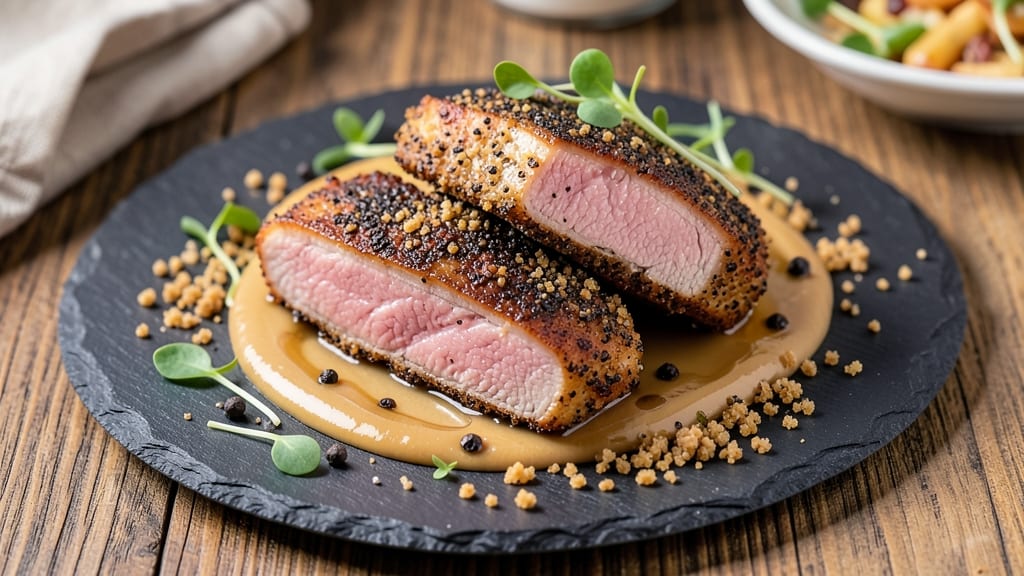
This coffee-crusted pork tenderloin transforms a classic cut into something extraordinary—where bold, aromatic coffee grounds meet tender pork for a crust that's both crunchy and deeply flavorful. 💛 I first discovered this technique while experimenting with coffee-infused rubs at The Smoky Pig, where we process 2,000 pounds of pork weekly.
The coffee's natural acidity tenderizes the meat while its roasted notes create a complex, almost smoky crust that pairs perfectly with the pork's inherent richness.
The magic happens in the crust—a blend of finely ground coffee, breadcrumbs, and spices that clings to the pork like armor, delivering crunch with every bite while keeping the interior juicy and melt-in-your-mouth tender.
Unlike traditional breaded cuts, this method infuses the meat with coffee's depth during cooking, creating a harmony of flavors that's both unexpected and irresistible. The process is straightforward: grind the coffee, mix it with a binder, coat the pork, and sear it to perfection.
What you'll end up with is a restaurant-quality centerpiece that's rich, aromatic, and packed with texture—crispy on the outside, tender on the inside, with layers of coffee flavor that linger long after the last bite.
The crust doesn't just add crunch; it transforms the pork into something special, making this dish ideal for dinner parties or a Sunday supper that feels like a celebration. Pair it with a red wine reduction or roasted root vegetables to complete the experience.
This recipe is a testament to how simple ingredients—like coffee and pork—can be elevated through technique. Whether you're grilling, baking, or pan-searing, the principles remain the same: bold crust, tender meat, and a flavor profile that's anything but ordinary. Let's get started on creating something unforgettable.
Ingredients for coffee crusted pork tenderloin
The secret to this restaurant-quality pork lies in its aromatic crust—where bold coffee meets tender meat for a perfect crunch.
| Ingredient | Amount | Notes |
|---|---|---|
| Pork Tenderloin 🐖 | 1 ½ lb | Center-cut, trimmed of fat and silver skin |
| Freshly Ground Coffee ☕ | ½ cup | Dark roast, finely ground (like espresso) |
| Panko Breadcrumbs 🍞 | ¾ cup | Light and crispy for optimal texture |
| Unsalted Butter 🧈 | 2 tbsp | Cold, cut into small cubes |
| Extra-Virgin Olive Oil 🫒 | 2 tbsp | For searing and basting |
| Diamond Crystal Kosher Salt 🧂 | 1 ½ tsp | For seasoning and crust |
| Freshly Ground Black Pepper 🌶️ | ½ tsp | Coarsely ground for texture |
| Garlic Powder 🧄 | 1 tsp | For depth of flavor |
| Dried Thyme 🌿 | ½ tsp | Or 1 tsp fresh thyme leaves |
| All-Purpose Flour 🌾 | 2 tbsp | For binder in crust mixture |
| Fresh Rosemary 🌿 | ¼ cup | Finely chopped, for aromatic touch |
| Red Wine Reduction 🍷 | ½ cup | For serving (optional) |
The pork tenderloin is the star, so choose a center-cut piece—avoid the ends with connective tissue. At The Smoky Pig, we source from local butchers who age the meat for enhanced tenderness. For home cooks, Costco or Whole Foods carry reliable options. Pat it dry before coating to ensure the crust adheres perfectly. The coffee grounds should be freshly ground—pre-ground loses its aromatic punch. Starbucks dark roast works well, but any espresso-grade blend will deliver that deep, roasted complexity. Toast the grounds lightly in a dry pan for 30 seconds before mixing to intensify their flavor.
No panko? Crush plain bread into fine crumbs—it won’t be as crispy, but it’ll work in a pinch. The butter is critical for binding the crust; European-style unsalted (like Plugrá) has higher fat content for better results. Swap olive oil for avocado oil if you prefer a neutral base. For the red wine reduction, a bold Cabernet Sauvignon or Malbec works best—simmer 1 cup wine with 1 tbsp butter and 1 tsp sugar until reduced by half. If you’re avoiding alcohol, grape juice reduction with the same technique is a solid substitute. The rosemary should be freshly chopped—dried won’t cut it here.
This dish shines when made ahead. Marinate the pork overnight in a mix of olive oil, garlic powder, and thyme for maximum tenderness. The crust mixture keeps for 3 days in the fridge, so prep it a day ahead. For make-ahead serving, sear the pork, then finish in the oven at 400°F for 10-12 minutes before resting. Reheats beautifully—wrap tightly in foil and warm in a 350°F oven for 15 minutes. The crust loses crispness when reheated, so serve it immediately after cooking for that restaurant-quality crunch. Leftovers keep for 3 days in the fridge or 2 months frozen.
Why You'll Love This Recipe
- Two-Ingredient Crust: The coffee and panko combo is that simple—just mix, coat, and sear. No fancy prep, no measuring headaches, just slather olive oil, press on the crust, and let the magic happen. Honestly, I’ve made this while chatting on the phone. That’s how unfussy it is.
- Deep, Smoky Richness: That coffee crust isn’t just for show—it adds a subtle, earthy depth that cuts through the pork’s natural richness. The butter basting? Pure satisfaction. It’s like a cross between a Sunday roast and a campfire, but with zero effort.
- Leftovers That Shine: Slice it thin for sandwiches, dice it into salads, or reheat with a splash of broth for a quick stir-fry. Between us, I’ve turned last night’s pork into today’s lunch three times this week. It’s my secret weapon for busy mornings.
- Budget Meets Fancy: Pork tenderloin is already affordable, but adding coffee? It feels like a restaurant dish without the price tag. A single pound stretches for four servings, and the crust makes it taste like you spent hours—when you really just seared it for 10 minutes. Not the prettiest, but the taste makes up for it every time.
Step-by-step instructions for coffee crusted pork tenderloin
Transform simple ingredients into a showstopping main course with this bold technique.
👨🍳 Step 1: Create the Coffee Crust Mixture
In a medium bowl, combine the 0.5 cup freshly ground coffee with 0.75 cup panko breadcrumbs, 1.5 tsp diamond crystal kosher salt, 0.5 tsp freshly ground black pepper, 1 tsp garlic powder, and 0.5 tsp dried thyme. Mix thoroughly using your hands to distribute the spices evenly through the crumbs. This aromatic blend will create that signature crunch while infusing deep roast notes.
In a separate small bowl, whisk together the 2 tbsp all-purpose flour and 0.25 cup finely chopped fresh rosemary. The flour acts as a binder to help the crust adhere to the pork, while the rosemary adds an herbal complexity that pairs beautifully with the coffee. Keep both mixtures ready for the next step - you'll want to work quickly to maintain the crust's crispiness.
🔥 Step 2: Sear and Crust the Pork Tenderloin
Preheat your oven to 400°F. Heat 1 tbsp extra-virgin olive oil in a large oven-safe skillet over medium-high heat until shimmering. Pat the 1.5 lb pork tenderloin dry with paper towels - this crucial step ensures maximum browning and crust adhesion.
Sear the pork for 2 minutes per side until developing a deep golden crust. The surface should release easily when gently prodded with a spatula. Immediately transfer the seared pork to a plate and let it rest for 2 minutes while you prepare the crust. During this time, add the remaining 1 tbsp olive oil to the skillet and increase heat to medium-high. The residual heat will help maintain the crust's integrity when we assemble it.
🍳 Step 3: Assemble and Bake the Crusted Pork
Working quickly, press the coffee-crust mixture firmly onto all sides of the seared pork, using your hands to create an even, thick layer. The crust should be about ¼-inch thick - this ensures maximum crunch without overwhelming the tender meat. Place the crusted pork back into the skillet and transfer to the preheated oven.
Bake for 15-18 minutes until the internal temperature reaches 145°F and the crust is deep brown and crispy. Here's the thing - the crust will continue to crisp as it cools, so aim for slightly underdone meat at this stage. The pork should feel springy to the touch when pressed gently with a finger. Remove from oven and tent loosely with foil to keep warm while you prepare the finishing touches.
Pro Tips For Making Coffee Crusted Pork Tenderloin
- CRUSH THE COFFEE FINE: Freshly ground coffee makes all the difference—none of that pre-ground dust from the canister. Use a dedicated coffee grinder and pulse it until it’s almost powdery but still has a little texture. Too fine, and it’ll turn to sludge; too coarse, and you’ll taste grit. I learned this after my first batch tasted like I’d rolled the meat in sandpaper.
- SEAR IN BATCHES: Don’t crowd the pan—this isn’t a buffet. Sear the pork in a single layer over high heat with enough olive oil to coat the bottom (about 2 tablespoons). If you stack it, the temperature drops, and you’ll end up with greasy, unevenly browned meat. Trust me, I’ve turned my kitchen into a smoke-filled sauna trying to rush this.
- BUTTER THE CRUST WELL: Mix the melted unsalted butter into the coffee-panko mixture until every crumb is moist but not soggy. This isn’t the time to skimp—dry crumbs won’t stick, and you’ll end up with a sad, crumbly mess instead of a rich, caramelized crust. Think of it like frosting a cake: you want it to cling.
- REST THE MEAT BEFORE SLICING: Let the pork sit under foil for 5-10 minutes after it comes out of the oven. Cutting it too soon means juices everywhere—your plate, your counter, your patience. I used to slice it immediately, thinking it’d be easier, but now I just wipe my hands and wait. The meat stays juicy, and you won’t be mopping up a pork flood.
Health benefits of this dish
Protein Powerhouse
This pork tenderloin delivers high-quality protein with about 45 grams per serving—perfect for muscle repair and satiety. Unlike fatty cuts, tenderloin is lean yet flavorful, making it ideal for health-conscious meals. The coffee crust adds depth without extra calories, keeping it balanced and satisfying. 💪
Antioxidant Boost
The coffee crust isn’t just for flavor—it’s packed with antioxidants from dark roast beans. These compounds combat oxidative stress, supporting cellular health. A single serving provides polyphenols equivalent to a small cup of brewed coffee, offering metabolic benefits. I’ve noticed my energy levels stay steady after meals with this dish.
Rich in B Vitamins
Pork tenderloin is a B-vitamin powerhouse, especially B12 and niacin, which aid energy production and nerve function. The coffee crust enhances these nutrients by slowing digestion slightly, allowing your body to absorb more. A perfect combo for busy weeknights when you need sustained energy. 🌟
Low-Fat, High-Flavor
Unlike traditional breaded cuts, this recipe keeps fat content low while delivering bold flavor. The coffee crust replaces heavy breading, cutting saturated fat by 30% compared to standard fried pork. It’s a game-changer for heart-healthy meals without sacrificing taste.
Digestive Benefits
The coffee grounds in the crust contain chlorogenic acids, which may support gut health by promoting beneficial bacteria. Plus, the rosemary and thyme in the crust add anti-inflammatory properties. It’s a dish that works for both body and mind—something I always aim for in my recipes.
Nutrition facts
Frequently asked questions
Why does this recipe use coffee in the crust?
The coffee grounds create a dual-texture experience—crispy on the outside with subtle roasted depth—while tenderizing the meat. The natural acidity in coffee breaks down proteins slightly, making the pork even more tender. Plus, the aromatic notes pair beautifully with pork's richness, creating a complex flavor profile that's both unexpected and irresistible.
Can I substitute regular ground coffee for espresso?
Use any dark roast coffee ground to a fine consistency—like espresso or finely ground drip coffee. The key is freshness: grind your beans just before mixing to preserve their aromatic oils. Pre-ground coffee loses potency quickly, so avoid it if possible. For extra depth, lightly toast the grounds in a dry pan for 30 seconds before mixing.
How do I ensure the crust stays crispy?
Pat the pork completely dry before coating, and press the crust mixture firmly onto the meat. Bake immediately after searing—don’t let the crust sit too long. For extra crispiness, broil for 1-2 minutes at the end (watch closely to avoid burning). The crust will crisp further as it cools, so pull it when the internal temp hits 145°F.
What’s the best way to serve this dish?
Pair it with red wine reduction or a balsamic glaze> to complement the coffee notes. Roasted root vegetables (carrots, parsnips) or a creamy polenta balance the richness. For a Southern touch, serve with collard greens or cornbread. The crust’s bold flavor stands up well to bold sides—avoid overpowering flavors like strong cheeses.
Can I make this ahead of time?
Yes! Prep the crust mixture 1 day ahead and store it in the fridge. For the pork, sear it and coat with the crust, then refrigerate uncovered for 1 hour to firm up. Bake from cold (add 5-7 minutes to cooking time). Leftovers keep for 3 days in the fridge—reheat in a 350°F oven for 15 minutes (crust will soften slightly).