
Sauces & Condiments
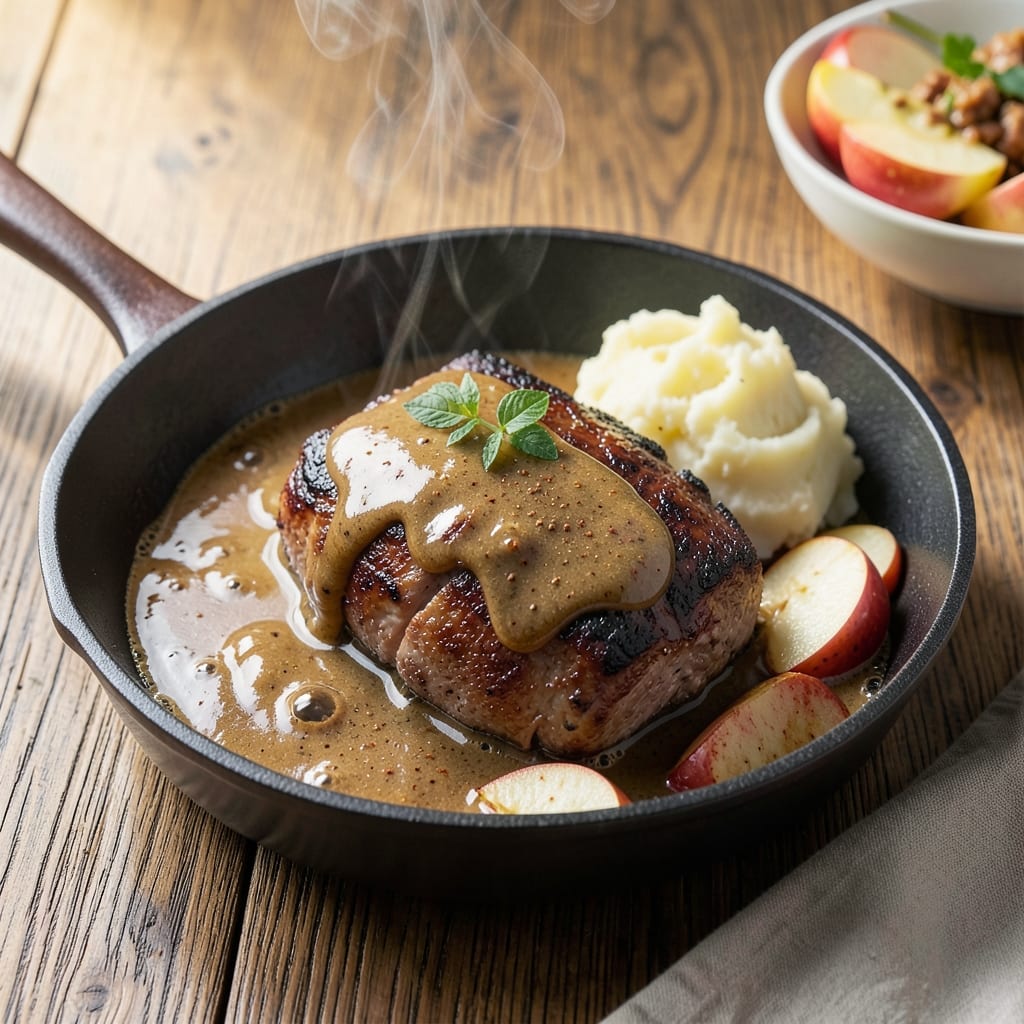
This apple cider gravy recipe for pork transforms simple pork drippings into a velvety sauce with autumnal spice and apple depth—perfect for elevating roasted pork chops or pulled pork. The combination of rich pork fat and sweet-tart apple cider creates a balance that’s both comforting and sophisticated, with just a hint of cinnamon and nutmeg for warmth. I developed this sauce after realizing how much my family loved the flavors of apple cider donuts paired with pork—now it’s a staple in my fall menu.
The secret lies in building layers of flavor: first, the pork drippings form a golden roux, then apple cider adds brightness, and finally, spices like cinnamon and cloves deepen the complexity. Unlike traditional gravies, this version stays silky-smooth without being overly thick, making it ideal for drizzling over crispy pork or serving alongside mashed potatoes. The process is straightforward—just 15 minutes of active time—so you can focus on cooking the pork while the gravy simmers away.
What makes this gravy truly special is how it transforms an ordinary pork dish into something memorable. The apple cider’s natural sweetness caramelizes slightly as it reduces, creating a rich, almost jammy quality that pairs beautifully with savory pork. Each spoonful delivers a perfect harmony of smoky pork fat, spiced apple, and just enough tang to cut through richness. It’s the kind of sauce that makes guests ask for the recipe—and the kind that turns weeknight dinners into something extraordinary.
Use this gravy to finish roasted pork tenderloin, braised pork ribs, or even pork fried rice for a unexpected twist. The recipe scales easily, so you can make a big batch and store it in the fridge for up to a week. Whether you’re hosting a fall gathering or just craving a cozy weeknight meal, this gravy delivers restaurant-quality flavor with minimal effort. Let’s get cooking!
Ingredients for apple cider gravy recipe for pork
Nine simple ingredients transform pork drippings into autumn's coziest gravy.
| Ingredient | Amount | Notes |
|---|---|---|
| Pork Drippings 🥓 | 2 cups | From roasted pork, fat rendered |
| Unsalted Butter 🧈 | ½ cup | Full-fat for richness |
| Apple Cider 🍎 | 1 cup | Unfiltered, tart variety preferred |
| All-Purpose Flour 🌾 | ½ cup | For smooth roux formation |
| Ground Cinnamon 🌿 | ½ tsp | Freshly ground preferred |
| Ground Nutmeg 🌿 | ¼ tsp | Freshly grated for depth |
| Ground Cloves 🌶️ | ¼ tsp | Lightly toasted for warmth |
| Salt 🧂 | ½ tsp | Kosher or sea salt |
| Black Pepper 🌶️ | ¼ tsp | Freshly cracked for heat |
| Apple Cider Vinegar 🍋 | 1 tbsp | For tangy brightness |
The pork drippings are the foundation—save them from roasting pork chops or ribs (about 2 cups). If you're short, butter bridges the gap perfectly, but nothing beats the real deal. For apple cider, Mott's or Woodchuck brands work best—their tartness cuts through the richness. The flour? King Arthur or Bob's Red Mill make the smoothest roux. Spices are key: grab freshly ground cinnamon and nutmeg from Penzeys if you want that restaurant-quality warmth. Cloves should be whole and lightly toasted—just 10 seconds in a dry pan to deepen their flavor.
No pork drippings? Substitute with equal parts chicken fat and butter, though the flavor won't be quite as rich. Short on apple cider? Cranberry juice or unsweetened apple juice works in a pinch, but add an extra pinch of cinnamon to compensate. The vinegar is non-negotiable for that tangy brightness—Bragg's is my go-to. For the spices, if you don't have cloves, allspice or a pinch of cayenne adds heat. The flour can be swapped for cornstarch (use half the amount) if you prefer a glossier finish. And if you're making this ahead, reduce the apple cider by half to prevent curdling when reheating.
This gravy keeps beautifully—5 days in the fridge, 3 months frozen. For freezing, cool it completely first, then portion into ice cube trays. Once solid, transfer to a freezer bag. Reheat gently on the stove, adding a splash of water or apple cider to loosen it up. I always make a double batch—one for the pork dinner and one to drizzle over mashed potatoes. The flavors actually deepen overnight, so leftovers taste even better the next day.
Why You'll Love This Recipe
- Uses What You Have: I never have to hunt for extra ingredients—just the pork drippings from my roast, a splash of apple cider (usually the cheap bottled kind), and a handful of pantry staples. Honestly, it’s the kind of recipe that makes me feel like I’m cooking fancy without breaking a sweat.
- Rich Without Effort: That first spoonful of gravy—smooth, with just a hint of cinnamon warmth and the deep, savory pork flavor—is what makes this worth it. The apple cider cuts through the richness while keeping it cozy, like a hug in sauce form.
- Leftovers That Shine: This gravy actually improves the next day. I’ll reheat it with a pat of butter, and suddenly, last night’s pork chops taste even better. Between us, I’ve turned cold roast pork into a next-day sandwich star with just a drizzle of this.
- Fall Feels Instant: No need to plan ahead—just make it when you’re craving that autumnal vibe. Drizzle it over pork chops for a weeknight dinner, or use it to glaze a ham for holidays. It’s my go-to when I want comfort without the fuss.
Step-by-step instructions for apple cider gravy for pork
This rich, spiced apple cider gravy transforms simple pork drippings into something extraordinary.
Create a Rich Pork Butter Base
Place a large skillet over medium heat and add the 2 cups pork drippings along with the 0.5 cup unsalted butter. Let the mixture heat through for 2-3 minutes until the butter melts completely and the drippings begin to bubble gently. You're building the flavor foundation here—the pork fat adds richness while the butter creates a velvety texture.
Watch for small bubbles forming around the edges—that's your signal the fat is ready for the next step. If the drippings start to smoke, reduce the heat slightly. This isn't a sear; we're just getting everything hot and ready to work with. The combination of pork fat and butter will create that signature silky mouthfeel we're after.
Whisk in Flour for a Smooth Roux
Lower the heat to medium-low and slowly sprinkle in the 0.5 cup all-purpose flour while whisking constantly. This gradual addition prevents lumps from forming in your roux—the flour should dissolve completely into the fat within 1-2 minutes of continuous whisking.
Keep whisking for another 2 minutes until the mixture turns a light golden color. You're looking for a consistency similar to wet sand—it should coat the back of a spoon but still flow smoothly. If it gets too dark, you've overcooked it; if it's too pale, you haven't cooked it long enough. This roux is the backbone of your gravy, so take your time getting it right.
Deglaze with Apple Cider and Vinegar
Pour in the 1 cup apple cider and 1 tablespoon apple cider vinegar all at once, whisking vigorously to scrape up all the browned bits from the bottom of the pan. These flavorful bits contain all the porky goodness we want to incorporate. Let the mixture simmer gently for 3-4 minutes until it thickens slightly and the raw flour taste disappears.
Here's where the magic happens—the apple cider's acidity brightens the pork flavors while the vinegar adds a subtle tang that balances everything. You'll notice the mixture bubble vigorously at first, then settle into a gentle simmer. If it gets too thick before you're ready, just add a splash of water to loosen it up.
Season with Spices and Simmer
Add all the spices—0.5 teaspoon ground cinnamon, 0.25 teaspoon ground nutmeg, 0.25 teaspoon ground cloves, 0.5 teaspoon salt, and 0.25 teaspoon black pepper—and whisk to combine thoroughly. The spices should dissolve completely into the gravy. Let the mixture simmer gently for 5-7 minutes, stirring occasionally, until it reaches your desired consistency.
You want a gravy that coats the back of a spoon but still flows smoothly—thick enough to cling to pork chops but not so thick it's gluey. Taste as you go and adjust seasoning if needed. The spices should be present but not overpowering; they're meant to enhance, not dominate. If the gravy looks too thin, let it simmer uncovered for another minute or two to reduce slightly.
Strain and Serve Warm
For the smoothest texture, strain the gravy through a fine-mesh sieve into a clean saucepan. This removes any flour bits that might make it slightly grainy. Return the gravy to low heat and keep it warm until serving. The gravy should maintain its rich, velvety consistency while staying warm enough to pour beautifully over your pork.
This gravy tastes best served immediately, so have your pork ready to go. The warm spices will complement the pork perfectly, creating a harmonious balance of sweet, savory, and slightly tangy flavors. Each spoonful should be rich and flavorful, with the apple cider adding just the right amount of brightness to cut through the richness of the pork.
Pro Tips For Making Apple Cider Gravy Recipe For Pork
- Deglaze Immediately: As soon as you pull the pork from the pan, pour in that apple cider while the drippings are still hot—don’t let them cool or they’ll turn into a greasy sludge. I learned this the hard way after scraping burnt bits off my gravy for the third time. ---
- Use Cold Butter: Cut the unsalted butter into small cubes and add it to the gravy off the heat—this keeps the sauce from breaking or curdling. My grandmother swore by this, and she was right: the gravy stays velvety smooth, not greasy. ---
- Whisk Like You Mean It: When you add the flour to the pork drippings, stir aggressively for 2 full minutes before pouring in the cider—this cooks out the raw flour taste. Skip this, and you’ll get that chalky aftertaste no one wants. ---
- Reduce the Cider Slowly: Let the gravy simmer uncovered for 8–10 minutes, stirring occasionally, until it thickens to a coatable consistency. Rushing it with high heat makes it gluey; patience here guarantees a rich, glossy finish. (Yes, even if you’re impatient like me.)
Regional styles of this apple cider gravy recipe for pork
New England Apple Cider Style
In New England, apple cider gravy takes on a heartier profile using hard cider instead of traditional apple cider. I love this version for its deeper maltiness—just substitute 1 cup hard cider (like Angry Orchard or Samuel Smith's Nut Brown Ale) for the apple cider in the recipe. The alcohol burns off during cooking, leaving behind a rich, caramel-like depth that pairs perfectly with roasted pork shoulder. Add ¼ tsp cinnamon and pinch of allspice for that classic New England spice blend. 🍎
Southern Smoky Twist
Down South, they love to infuse the gravy with smoked paprika and a splash of bourbon for a bold, smoky-sweet profile. After making the roux, deglaze with ½ cup apple cider and ½ cup bourbon (like Maker's Mark), then simmer until the alcohol cooks off. Finish with ½ tsp smoked paprika and a pinch of cayenne for heat. This version works amazingly with pulled pork or smoked pork ribs. 🔥
German Apple-Braised Style
German cuisine brings a caramelized onion twist to apple cider gravy, creating a sweeter, more complex sauce. Sauté 1 cup thinly sliced onions in the pork drippings until golden, then proceed with the recipe. After adding the apple cider, stir in 2 tbsp apple butter (like Mrs. Henderson’s—my childhood favorite!) and 1 tsp fresh thyme. This rich, jammy gravy pairs beautifully with braised pork knuckle or sauerkraut. 🌟
Pacific Northwest Fusion
Here in Portland, I love blending apple cider gravy with local ingredients for a modern twist. Swap the cinnamon for ½ tsp cardamom and add 1 tbsp pear puree (from local pears) to the simmering gravy. Top with crispy fried shallots for crunch. This lighter, slightly floral version works well with grilled pork tenderloin or apple-glazed pork chops. 🌿
Cincinnati Classic
Back in my hometown, we used this gravy to top pork chops with apple butter on the side. The local trick? Adding 1 tbsp molasses to the simmering gravy for a deeper, almost chocolatey note. Serve with creamy mashed potatoes and sautéed green beans for a true Ohio comfort meal. The molasses adds a subtle sweetness that balances the tangy apple cider perfectly. 🥓
Nutrition facts
Frequently asked questions
Can I make this gravy without pork drippings?
Yes! For a similar rich flavor, use 2 cups chicken fat or 1 cup chicken fat + 1 cup butter. If you have no animal fat, substitute with 2 cups vegetable oil, though the flavor won't be as porky. For extra depth, add 1 teaspoon smoked paprika to the roux to mimic the porky richness.
How do I prevent lumps in the gravy?
Whisk the flour into the hot fat gradually over 1-2 minutes while keeping heat on medium-low. For extra smoothness, sift the flour before adding or use a whisk with a fine mesh strainer. If lumps form, simply strain the finished gravy through a fine-mesh sieve before serving.
Can I make this gravy ahead of time?
This gravy actually tastes better the next day. Store it in an airtight container in the fridge for up to 5 days. When reheating, warm it gently on the stove over low heat, stirring occasionally. If it thickens too much, add a splash of apple cider or water to loosen it. For freezing, cool completely first, then portion into ice cube trays before transferring to a freezer bag.
What's the best way to serve this gravy?
Drizzle it generously over roasted pork chops, pork tenderloin, or pulled pork for maximum flavor impact. It also pairs beautifully with mashed potatoes, cornbread, or even as a dipping sauce for pork sliders. For extra elegance, garnish with a sprinkle of fresh thyme or a drizzle of apple cider reduction.
Why does my gravy taste too sweet?
The apple cider's natural sweetness can overpower if reduced too much. Balance it by adding 1 extra teaspoon of apple cider vinegar or ½ teaspoon of black pepper to cut through the sweetness. For a more savory profile, reduce the apple cider by ¼ cup next time and add ½ cup chicken or pork stock instead. Taste as you go—this gravy should have a perfect balance of sweet, tangy, and savory flavors.